How to Choose the Best Stateroom for Your Cruise
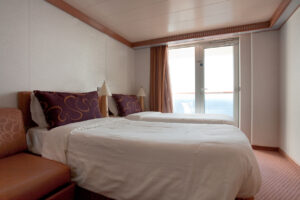
Choosing the right stateroom can make your entire cruise feel smoother, quieter, and more comfortable. If you’re wondering how to choose your stateroom, the decision really comes down to a few simple factors: movement, noise, convenience, and what kind of experience you want during your sailing.
Deck Level
Mid‑Level Decks
These decks offer the most balanced experience on the ship. You’ll feel noticeably less movement here because mid‑level decks sit closer to the ship’s center of gravity. They’re also ideal for convenience—close enough to dining, entertainment, and lounges without being directly under high‑traffic areas. For most travelers, this is the “safe choice” that delivers comfort without compromise.
Higher Decks
Higher decks put you closer to the pool, sun decks, buffet, and outdoor spaces, which is perfect if you love sea days or want quick access to the action. The trade‑off is increased motion, especially in rough seas or windy conditions. These decks also tend to be busier and louder, particularly early in the morning and late at night when people are moving between venues.
Lower Decks
Lower decks offer the most stability and the quietest environment. Because they sit deeper in the ship, you’ll feel the least movement—ideal for anyone prone to seasickness. These decks are also close to the gangway on port days, making them convenient for early excursions. The only downside is more stair or elevator time to reach outdoor areas and upper‑deck activities.
Forward, Midship, or Aft
Midship
This is the sweet spot for the smoothest ride. If you’re sensitive to motion or want the most stable experience, midship is the way to go.
Forward
You’ll feel more movement here, especially when the ship is sailing into waves. Forward cabins are great for early‑morning port arrivals and dramatic views, but they’re not ideal for motion‑sensitive travelers.
Aft
Aft cabins offer beautiful wake views and a peaceful atmosphere. You may feel some vibration from the engines, especially on older ships, but many cruisers love the relaxing sound and scenery.
Noise Considerations
Avoid High‑Traffic Decks
Cabins directly under the pool deck are some of the noisiest on the ship. You may hear early‑morning chair setup, scraping loungers, running kids, and deck‑washing equipment long before you’re ready to wake up. Cabins above or below theaters, nightclubs, sports courts, or dining rooms can pick up music, bass vibrations, late‑night shows, or kitchen prep. If you’re a light sleeper, these areas are worth avoiding.
Look for “Stateroom Sandwiches”
These are cabins with other staterooms above, below, and beside you. They’re consistently the quietest spots on the ship because you’re insulated from public‑area noise. If peace and quiet are a priority, this is the safest choice.
Hallway Traffic
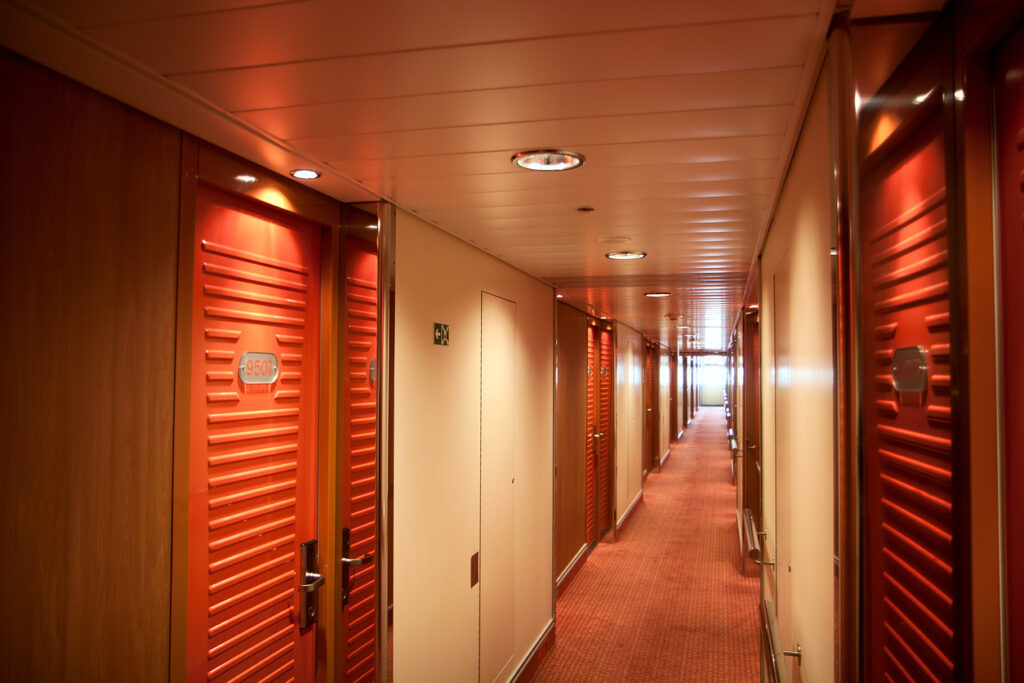
Cabins near elevators and stairwells are convenient, but they come with steady foot traffic—families heading to breakfast, crowds returning from shows, and people chatting while they wait for the elevator. If you prefer a quieter environment, choose a cabin farther down the hallway. The walk is longer, but the noise drops dramatically.
Ship‑Specific Sounds
Every ship has its own quirks. Aft cabins may feel engine vibration, forward cabins may hear anchor operations on port mornings, and some midship areas pick up noise from crew corridors. These sounds aren’t constant, but they’re worth keeping in mind if you’re sensitive to unexpected noises.
Convenience and Proximity
Near Elevators
Being close to the elevators is one of the most convenient locations on the ship. You’ll reach dining rooms, lounges, and entertainment venues quickly, and it’s especially helpful if you have mobility needs or prefer minimal walking. The trade‑off is steady foot traffic—families heading to breakfast, crowds returning from shows, and people chatting while they wait for the elevator.
Near Stairs
Stair‑adjacent cabins are ideal for active cruisers who want fast access without relying on elevators. You can move between decks quickly, especially during busy times when elevators fill up. Noise is generally lower than elevator areas, but you may still hear occasional bursts of traffic during peak dining and show times.
Near the Port/Excursion Exit
Lower decks and midship areas are closest to the gangway, making them perfect if you have early excursions, want to be among the first off the ship, or prefer a smooth, quick exit on port days. You’ll avoid long elevator waits and crowded stairwells. The only downside is that these decks can feel busier on mornings when the ship is cleared for disembarkation.
Near Key Venues
Some cruisers prefer to stay close to the spaces they use most—like the spa, gym, kids’ club, casino, or buffet. This can save time and steps throughout the week. Just keep in mind that proximity often means more noise and more hallway traffic, especially near popular venues.
Seasickness Considerations
- Midship + lower deck = least movement
- Forward + high deck = most movement
- A balcony can help some travelers feel better because of fresh air and a visible horizon
- Avoid forward cabins if you’re sensitive to motion
Special Room Types to Consider
Connecting Rooms
These are ideal for families, multigenerational groups, or anyone who wants shared space without crowding into a single cabin. You get two bathrooms, double the storage, and the ability to open the interior door for a suite‑like feel.
Accessible Rooms
These cabins are designed for guests with mobility needs and often offer some of the most spacious layouts on the ship. Wider doorways, roll‑in showers, open floor plans, and strategically placed grab bars make moving around easier.
Obstructed View Cabins
These rooms give you natural light at a lower price point. The view may be partially blocked by lifeboats or equipment, but you still get daylight and a sense of openness.
Unique or Oversized Layouts
Some ships have hidden gems—corner balconies, angled rooms, extra‑deep interiors, or cabins with unusually large verandas. These aren’t always labeled differently on the deck plan, but they can offer significantly more space for the same price.
Aft‑Facing and Forward‑Facing Rooms
Aft‑facing balconies offer sweeping wake views and a peaceful, private feel. Forward‑facing rooms often have dramatic ocean views and a sense of adventure, especially during sail‑ins. Both come with trade‑offs, but they deliver some of the most memorable views onboard.
Final Thoughts
Understanding how to choose your stateroom makes your cruise feel more comfortable from the moment you board. Once you know whether movement, noise, convenience, or views matter most, you’ll feel confident selecting the perfect cabin. With a little planning and a clear sense of how to choose your stateroom, you’ll enjoy a smoother, quieter, and more relaxing vacation. And as you compare options across the ship, keeping how to choose your stateroom in mind helps you narrow down the location that fits your travel style best.
More Room‑Related Guides You’ll Find Useful
- What Your Room Steward Can Bring to Your Room
- How to Choose the Best Stateroom
- Cruise Room Cleaning – What to Expect
- Cruise Cabin Checklist – What to do Before You Unpack
- Muster Station Considerations
- Connecting Rooms & Family Cabin Setups
- Reasons to Decorate Your Cruise Cabin Door
- Best Cruise Cabin for Seasickness
- Royal Caribbean Ocean View VS Boardwalk View
- Cruise Tipping Etiquette