Agora – Ephesus, Turkey
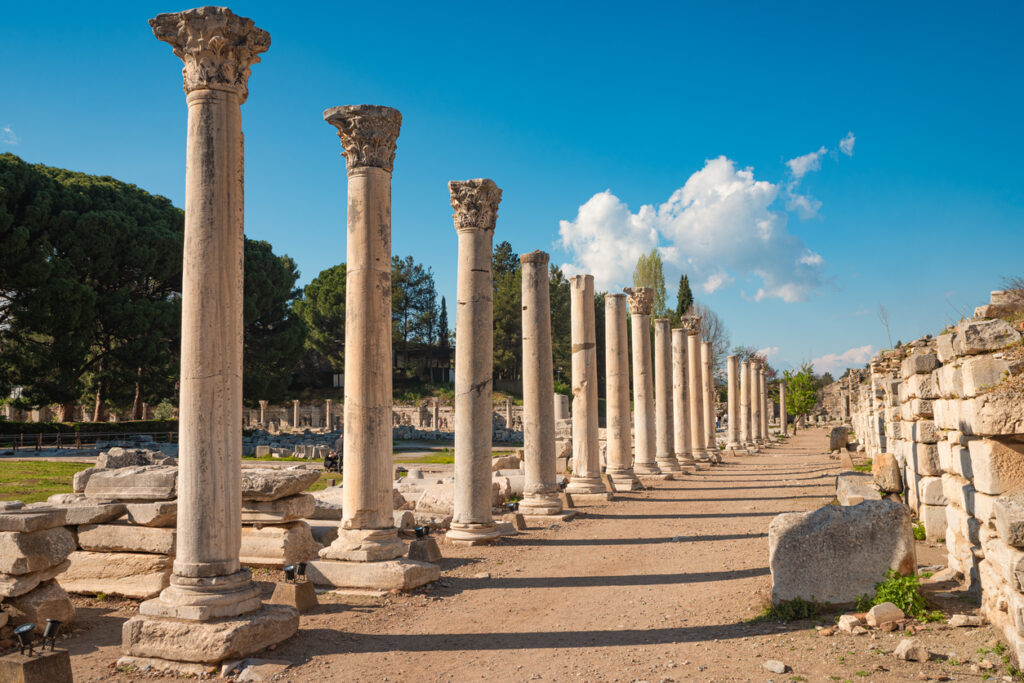
The Agora was the commercial and social heartbeat of ancient Ephesus — a wide, open marketplace where merchants traded goods, citizens gathered to exchange news, and the daily rhythm of the city unfolded. Standing in this spacious rectangular square today, it’s easy to imagine the energy that once filled the space: vendors calling out prices, shoppers moving between stalls, and officials conducting business beneath long colonnades. Even though the ruins are quieter now, the layout still tells the story of a thriving urban center at the height of Roman influence.
The Agora sits just off the main walking route through Ephesus, making it a natural pause point as you explore the ancient city. Its openness contrasts beautifully with the more dramatic, crowded landmarks nearby, offering a peaceful moment to take in the scale of the site and appreciate how everyday life once unfolded here. The surrounding hills and scattered ruins add atmosphere, giving the space a sense of depth and history that rewards slow exploration.
What It’s Known For
- Central marketplace of ancient Ephesus
- Large open square framed by columns
- Political, commercial, and social hub
- Remains of shops and storage rooms
- Views of surrounding ruins and hills
These features make the Agora one of the best places to understand how the city functioned beyond its grand monuments.
Why It’s Worth Visiting
The Agora offers a grounded, human perspective on Ephesus. While the Library of Celsus and the Great Theatre often steal the spotlight, this is where daily life happened — where people bought food, traded goods, debated politics, and connected with their community. The space feels atmospheric and surprisingly peaceful, giving you room to imagine the bustle that once filled the square. It’s a meaningful stop for travelers who enjoy understanding the lived experience of ancient cities.
Best Time to Visit
- Morning: Soft light and fewer crowds
- Midday: Bright, even lighting for photos
- Late afternoon: Warm glow across the open square
The Agora’s open layout makes lighting especially important, and each time of day offers a different mood.
How Long to Spend
Most visitors spend 10–15 minutes, though history lovers may linger longer to study the outlines of shops and the architectural remains. The space is easy to explore at your own pace.
What to Expect
You’ll see the foundations of a large rectangular marketplace surrounded by columns, with the remains of shops and storage rooms lining the edges. The open design makes it easy to walk around, take photos, and appreciate the scale of the ancient commercial center. Compared to the more crowded areas of Ephesus, the Agora feels calm and spacious — a welcome break in your walking route.
For Cruise Travelers
The Agora sits directly along the main path through Ephesus, making it an effortless stop during a guided tour or DIY visit. It’s scenic, easy to navigate, and adds valuable context to the grander structures you’ll see later. If you enjoy understanding how ancient cities operated day‑to‑day, this is one of the most informative stops in the entire site.
Insider Tips
- Look for the outlines of ancient shops along the perimeter
- Great spot for wide‑angle photos
- Visit early or late for the best lighting
- Combine with Curetes Street and the Library of Celsus
- Pause here to enjoy the quieter atmosphere
Common Complaints
- Less visually dramatic than other Ephesus landmarks
- Some visitors find the layout less defined than expected
- Limited signage explaining the ruins
- Can feel like a quick stop if you’re not into ancient city planning
Even with these notes, the Agora remains one of the most meaningful places to understand the daily life of Ephesus.
Final Thoughts
The Agora may not be the most ornate structure in Ephesus, but it offers one of the clearest windows into the city’s everyday world. Its open layout, historical significance, and peaceful atmosphere make it a rewarding stop as you explore the ancient ruins. Taking a moment to imagine the lively marketplace that once stood here adds depth and richness to your understanding of Ephesus as a whole.
For hours, tickets, and visitor details, you can check the official Turkish Museums website.
If you’re planning your time in port, you can explore more ideas in my full guide: Best Things to Do in Ephesus.
MORE HELPFUL EUROPEAN CRUISE PORT GUIDES
- Barcelona, Spain Cruise Port Guide – Top Things to Do
- Cartagena, Spain Cruise Port Guide – Top Things to Do
- Palma De Mallorca, Spain Cruise Port Guide – Top Things to Do
- Ephesus, Turkey Cruise Port Guide – Top Things to Do
- Mykonos, Greece Cruise Port Guide – Top Things to Do
- Santorini, Greece Cruise Port Guide – Top Things to Do
- Naples, Italy Cruise Port Guide – Top Things to Do
- Rome, Italy Cruise Port Guide – Top Things to Do
- Venice, Italy Cruise Port Guide – Top Things to Do
- Milan, Italy (Pre/Post Cruise) Guide – Top Things to Do
- Florence, Italy (Pre/Post Cruise) Guide – Top Things to Do