Category: Alaska

Alaska cruises take travelers through towering glaciers, rugged mountains, and untouched wilderness. Ships glide past icy landscapes, blending natural beauty with thrilling exploration.

Popular ports include Juneau, Skagway, Ketchikan, and Glacier Bay, where visitors can admire fjords, spot humpback whales, or embark on dog sledding and glacier trekking adventures. Rich Indigenous culture, historic gold rush towns, and breathtaking wildlife encounters add depth to the journey.

Perfect for nature lovers and adventure seekers, Alaska cruises deliver unforgettable sights and experiences.

  • Misty Fjords National Monument – Ketchikan, Alaska

    Misty Fjords National Monument – Ketchikan, Alaska

    Misty fjord surrounded by steep, forested cliffs and low clouds in Southeast Alaska.
    Towering cliffs and mist‑covered rainforest define the dramatic scenery of Misty Fjords National Monument near Ketchikan.

    Misty Fjords National Monument is one of the most spectacular natural wonders in Southeast Alaska, known for its towering granite cliffs, cascading waterfalls, and deep, glacier‑carved fjords. A visit to Misty Fjords National Monument gives travelers a breathtaking wilderness experience, with dramatic scenery that can only be reached by boat or floatplane from Ketchikan.

    Fun Facts

    • Misty Fjords spans over 2.3 million acres of protected wilderness.
    • The fjords were carved by glaciers over thousands of years, leaving sheer cliffs rising 3,000 feet above the water.
    • The area is part of the Tongass National Forest, the largest temperate rainforest in the world.
    • The monument is named for the near‑constant mist and low clouds that drift through the fjords.
    • Wildlife includes bears, mountain goats, seals, porpoises, whales, and bald eagles.
    • The iconic New Eddystone Rock, a volcanic spire, rises dramatically from the water.
    • Many boat tours travel through Rudyerd Bay, one of the most photographed fjords.
    • The only ways to visit are by boat tour or floatplane flightseeing.

    What to Expect During Your Visit

    Visitors experience Misty Fjords by cruising through narrow fjords surrounded by towering cliffs, waterfalls, and lush rainforest. Boat tours offer narration about geology, wildlife, and the area’s natural history, with plenty of opportunities for photography.

    Floatplane tours provide a bird’s‑eye view of the fjords, lakes, and cliffs, often with a water landing in a remote cove. The scenery is dramatic, peaceful, and unforgettable.

    Most tours last 2.5–4 hours, depending on the type of excursion.

    Why It’s Worth Visiting

    Misty Fjords National Monument is perfect for travelers who want a bucket‑list wilderness experience with dramatic scenery and abundant wildlife. It’s one of the most awe‑inspiring landscapes in Alaska and a highlight for many cruise visitors.

    Where It’s Located

    Misty Fjords lies 40–50 miles east of Ketchikan, deep within the Tongass National Forest.

    How to Get There From the Cruise Port

    • Boat tour: Departs from Ketchikan harbor; the most popular option.
    • Floatplane: Offers the fastest and most dramatic views.
    • Combination tours: Some include both boat and plane segments.
    • Taxi or shuttle: Only needed if your tour departs from a secondary marina.

    Best Time to Visit

    • June–August offers the best weather and visibility.
    • Morning flights often have calmer air.
    • Midday provides bright light for photography.
    • Rainy days create dramatic mist and waterfalls — perfect for atmosphere.

    Tips for Visiting

    • Bring a camera — the scenery is spectacular.
    • Wear layers — it can be cool on the water or in the air.
    • Choose a floatplane for aerial views and a shorter excursion.
    • Choose a boat tour for a relaxed, immersive experience.
    • Watch for New Eddystone Rock — a highlight of many tours.
    • Book early — Misty Fjords excursions sell out quickly.

    Common Complaints

    • Weather can limit visibility or cause cancellations.
    • Tours can feel long for travelers who prefer fast‑paced activities.
    • Wildlife sightings vary by day.
    • Floatplane tours may feel expensive — but are often considered worth it.

    Final Thoughts

    Misty Fjords National Monument is one of the most breathtaking and unforgettable wilderness areas in Alaska. With towering cliffs, cascading waterfalls, and serene fjords, Misty Fjords National Monument is a must‑visit for cruise travelers who want a dramatic, once‑in‑a‑lifetime adventure from Ketchikan.

    For more ideas to plan your day, explore my full guide to the top things to do in Ketchikan.

  • Tongass National Forest – Ketchikan, Alaska

    Tongass National Forest – Ketchikan, Alaska

    Moss‑covered trees and dense green undergrowth in the temperate rainforest of the Tongass National Forest in Alaska.
    The Tongass National Forest is known for its lush temperate rainforest, filled with moss‑covered trees and vibrant green plant life.

    Tongass National Forest is the largest temperate rainforest in the world and the defining landscape of Southeast Alaska, surrounding Ketchikan with towering evergreens, moss‑covered trails, waterfalls, and abundant wildlife. A visit to Tongass National Forest gives travelers a chance to experience pristine wilderness, quiet hiking paths, and the lush rainforest scenery that makes Ketchikan so unforgettable.

    Fun Facts

    • Tongass National Forest spans 16.7 million acres, making it the largest national forest in the United States.
    • It is the largest temperate rainforest on Earth.
    • The forest is home to brown bears, black bears, bald eagles, salmon, wolves, and Sitka black‑tailed deer.
    • Much of the forest is made up of old‑growth Sitka spruce and western hemlock.
    • Ketchikan receives over 150 inches of rain annually, fueling the lush vegetation.
    • The forest includes fjords, glaciers, islands, and more than 10,000 miles of shoreline.
    • Many Ketchikan attractions — including Totem Bight, Saxman, and Rainforest Sanctuary — sit within the Tongass.
    • The forest is part of the traditional homelands of the Tlingit, Haida, and Tsimshian peoples.

    What to Expect During Your Visit

    Visitors can explore the Tongass through easy walking trails, guided nature tours, wildlife viewing areas, and scenic overlooks. Expect towering trees, thick moss, ferns, rushing streams, and the classic misty atmosphere Ketchikan is known for.

    Popular ways to experience the Tongass include rainforest hikes, bear‑viewing tours, totem parks, and guided cultural walks. Even a short stroll offers that deep‑green, peaceful rainforest feeling.

    Most travelers spend 1–2 hours on a trail or guided walk.

    Why It’s Worth Visiting

    Tongass National Forest is perfect for travelers who want a peaceful, immersive nature experience close to the cruise port. It’s scenic, quiet, and full of wildlife — a must for anyone who loves forests, photography, or easy outdoor adventures.

    Where It’s Located

    Tongass National Forest surrounds all of Ketchikan, stretching across islands, mountains, and coastline throughout Southeast Alaska.

    How to Get There From the Cruise Port

    • Guided tour: The easiest way to access trails and wildlife areas.
    • Taxi or rideshare: Great for reaching specific trailheads.
    • Car rental: Ideal for exploring multiple sites within the forest.
    • Bike: Possible for nearby areas like Totem Bight.

    Best Time to Visit

    • June–August offers the warmest temperatures and best trail conditions.
    • Morning provides quiet trails and soft light.
    • Midday is great for photography in open areas.
    • Rainy days bring out the rainforest’s vibrant colors and atmosphere.

    Tips for Visiting

    • Wear waterproof shoes — trails can be muddy.
    • Bring a rain jacket — Ketchikan is famously wet.
    • Watch for bald eagles along the shoreline.
    • Stay alert for bears in salmon‑rich areas.
    • Combine with Totem Bight, Saxman, or Rainforest Sanctuary for a full nature day.

    Common Complaints

    • Trails can be muddy or slippery after rain.
    • Mosquitoes may be present in summer.
    • Some areas require transportation to reach.
    • Weather can be unpredictable — typical for Ketchikan.

    Final Thoughts

    Tongass National Forest is the heart of Southeast Alaska and one of the most beautiful places to explore in Ketchikan. With lush rainforest scenery, wildlife, and peaceful walking trails, Tongass National Forest is a must‑visit for cruise travelers who want to experience Alaska’s natural beauty up close. For more ideas to plan your day, explore my full guide to the top things to do in Ketchikan.

  • Great Alaskan Lumberjack Show – Ketchikan, Alaska

    Great Alaskan Lumberjack Show – Ketchikan, Alaska

    Competitors chopping logs with axes during a lumberjack wood‑chopping event.
    A high‑energy lumberjack competition showcases classic skills like axe chopping and log work in Ketchikan.

    he Great Alaskan Lumberjack Show is one of Ketchikan’s most energetic and crowd‑pleasing attractions — a fast‑paced blend of athletic skill, humor, and Alaska logging heritage presented just steps from the cruise port. World‑class lumberjacks compete in dramatic, high‑intensity events that showcase the strength, precision, and tradition behind Alaska’s historic logging industry. The atmosphere is lively and family‑friendly, making this one of the easiest and most entertaining activities to fit into a cruise‑day schedule. Whether you’re traveling with kids, adults, or a mixed group, the show delivers a fun, memorable slice of Alaskan culture.

    Fun Facts

    • The performers are professional lumberjacks, including former world champions who compete internationally.
    • Logging was once one of Ketchikan’s largest industries, shaping the town’s early economy and identity.
    • Events include log rolling, axe throwing, speed climbing, springboard chopping, and chainsaw carving — all based on real competitive logging sports.
    • The arena is modeled after a historic logging camp, giving the show an authentic frontier feel.
    • Audience participation is encouraged throughout the performance, adding to the energy and fun.
    • The show lasts about one hour, making it perfect for tight cruise schedules.
    • Princess Cruises guests sometimes receive a special version of the show tailored to their itinerary.
    • The venue is located just steps from the cruise dock, making it one of the most convenient attractions in Ketchikan.

    What to Expect During Your Visit

    Guests watch from a covered outdoor arena as two teams of lumberjacks compete in rapid‑fire events that highlight strength, speed, and skill. Expect cheering crowds, friendly rivalry, and plenty of photo‑worthy moments as axes fly, logs spin, and competitors race up towering poles. The show blends athleticism with humor, keeping the energy high and the audience engaged from start to finish. Because the seating is covered, the experience is comfortable even on Ketchikan’s famously rainy days. Most visitors spend 1–1.25 hours here, including seating and the performance.

    Why It’s Worth Visiting

    The Great Alaskan Lumberjack Show is ideal for travelers who want something fun, lively, and close to the port. It requires no transportation, no long time commitment, and appeals to all ages. Families love the humor and audience interaction, while adults appreciate the athleticism and Alaska‑themed storytelling. It’s also a perfect pairing with nearby attractions like Creek Street or a wildlife boat tour, making it a flexible addition to any Ketchikan itinerary.

    Where It’s Located

    The show takes place in a dedicated arena right next to the Ketchikan cruise port, just a 2–3 minute walk from most ships. Its unbeatable convenience is one of the reasons it’s so popular with cruise travelers.

    How to Get There From the Cruise Port

    • Walk: The arena is directly across from the dock.
    • Shuttle: Not needed.
    • Taxi: Only necessary if you’re coming from farther north in town.
    • Bike: Possible, but walking is easier.

    Best Time to Visit

    • Morning: Quieter shows with smaller crowds
    • Midday: Lively atmosphere with full audiences
    • Rainy days: Excellent choice since the venue is fully covered
    • Summer (June–August): Most showtimes and the highest energy levels

    Tips for Visiting

    • Arrive 10–15 minutes early for the best seats
    • Bring a camera — the action moves fast
    • Sit near the front for the most immersive experience
    • Combine with Creek Street or a Wildlife/Lighthouse Tour for a full day
    • Book early — shows often sell out on multi‑ship days

    Common Complaints

    • The humor can be cheesy — but it’s part of the charm
    • Shows may feel crowded during peak season
    • Not ideal for travelers seeking a quiet or cultural experience
    • Souvenir photos can be pricey

    Final Thoughts

    The Great Alaskan Lumberjack Show is one of Ketchikan’s most entertaining and easy‑access attractions. With fast‑paced competitions, skilled performers, and a lively atmosphere just steps from the cruise port, it’s a must‑visit for travelers who want a fun, memorable Alaska experience. Whether you’re cheering from the front row or simply enjoying the spectacle, the show adds excitement and personality to any day in port.

    For more ideas to plan your day, explore my full guide to the top things to do in Ketchikan.

  • Wildlife or Lighthouse Boat Tour – Ketchikan, Alaska

    Wildlife or Lighthouse Boat Tour – Ketchikan, Alaska

    Guard Island Lighthouse on a rocky, forested shoreline at the northern entrance to Tongass Narrows near Ketchikan, Alaska.
    Guard Island Lighthouse marks the northern entrance to Tongass Narrows, guiding boats traveling toward Ketchikan’s scenic coastline.

    A Wildlife or Lighthouse Boat Tour in Ketchikan is one of the most peaceful and scenic ways to explore Alaska’s coastline, offering close‑up views of eagles, seals, whales, and historic lighthouses. A Wildlife or Lighthouse Boat Tour gives travelers a relaxing, photography‑friendly experience on calm waters, with narration that highlights Ketchikan’s maritime history and rich coastal ecosystem.

    Fun Facts

    • Ketchikan’s coastline is home to bald eagles, harbor seals, sea lions, porpoises, and humpback whales.
    • Many tours cruise past Guard Island Lighthouse, built in 1903.
    • Guard Island is one of the few lighthouses still active in Southeast Alaska.
    • The Tongass Narrows is a major route for fishing boats, floatplanes, and marine wildlife.
    • Some tours include views of Saxman Village and surrounding rainforest.
    • The waters around Ketchikan are part of the Inside Passage, a protected marine corridor.
    • Lighthouse tours often include stories about shipwrecks, early settlers, and maritime navigation.
    • Wildlife sightings vary, but eagles are almost always present.

    What to Expect During Your Visit

    Your tour begins at the Ketchikan harbor, where you’ll board a comfortable sightseeing vessel with indoor seating and outdoor viewing decks. As you cruise along the coastline, guides point out wildlife, historic sites, and scenic landmarks.

    Expect calm waters, forested shorelines, and plenty of opportunities for photography. Many tours circle Guard Island Lighthouse, offering close‑up views and narration about its history. Wildlife sightings may include seals resting on rocks, eagles perched in trees, and porpoises swimming alongside the boat.

    Most tours last 2–2.5 hours.

    Why It’s Worth Visiting

    A Wildlife or Lighthouse Boat Tour is perfect for travelers who want a relaxing, scenic, and wildlife‑focused experience without strenuous activity. It’s ideal for photography, families, and anyone who loves coastal views.

    Where It’s Located

    Tours depart from the Ketchikan harbor, just steps from the cruise port.

    How to Get There From the Cruise Port

    • Walk: Most tour boats are within a 5–10 minute walk.
    • Shuttle: Some excursions include transportation to a secondary dock.
    • Taxi: Useful only if your tour departs from a farther marina.
    • Bike: Possible, but walking is easier.

    Best Time to Visit

    • Morning often offers calmer water and better wildlife activity.
    • Midday provides bright light for photography.
    • Summer (June–August) is peak season for marine wildlife.
    • Late summer increases chances of whale sightings.

    Tips for Visiting

    • Bring a zoom lens or binoculars for wildlife.
    • Wear layers — it’s cooler on the water.
    • Sit on the open deck for the best views.
    • Watch for eagles near shoreline trees.
    • Combine with Creek Street or Totem Bight for a full day of sightseeing.

    Common Complaints

    • Wildlife sightings vary by day.
    • Boats can feel crowded during peak season.
    • Weather may be misty or rainy — typical for Ketchikan.
    • Some travelers expect guaranteed whale sightings.

    Final Thoughts

    A Wildlife or Lighthouse Boat Tour is one of the most peaceful and scenic experiences in Ketchikan. With calm waters, historic lighthouses, and the chance to spot eagles, seals, and whales, a Wildlife or Lighthouse Boat Tour is a must‑visit for cruise travelers who want a relaxing and wildlife‑rich adventure on the water. For more ideas to plan your day, explore my full guide to the top things to do in Ketchikan.

  • Saxman Native Village – Ketchikan, Alaska

    Saxman Native Village – Ketchikan, Alaska

    Totem poles and a traditional clan house surrounded by forest at Saxman Native Village in Ketchikan, Alaska.
    Saxman Native Village showcases towering Tlingit totem poles and a traditional clan house, offering visitors a look at Alaska Native carving traditions.

    Saxman Native Village is one of the most culturally immersive attractions in Ketchikan, featuring one of the world’s largest collections of standing totem poles, a traditional clan house, and live carving demonstrations. A visit to Saxman Native Village gives travelers a deeper understanding of Tlingit and Haida culture, with storytelling, artistry, and performances that bring Alaska Native heritage to life.

    Fun Facts

    • Saxman is home to 25+ standing totem poles, many carved by master artists.
    • The village was established in 1894 by Tlingit people relocating from Cape Fox.
    • The Beaver Clan House is a full‑scale traditional community house used for cultural events.
    • The Carving Shed is one of the only places in Alaska where visitors can watch master carvers at work.
    • Many poles in the park are replicas of historic poles rescued from abandoned villages.
    • Seasonal dance performances showcase traditional regalia and songs.
    • Saxman is part of the National Register of Historic Places.
    • The village sits within the lush Tongass National Forest.

    What to Expect During Your Visit

    Visitors begin at the totem park, where towering poles line the forested pathways. Guides often share the stories behind each carving — clan histories, legends, and symbolic figures. The Beaver Clan House offers a dramatic interior space with carved posts and traditional artwork.

    Inside the Carving Shed, you may see artists shaping new poles or restoring historic ones. Seasonal cultural performances add music, dance, and storytelling to the experience.

    Most travelers spend 60–90 minutes here.

    Why It’s Worth Visiting

    Saxman Native Village is perfect for travelers who want a deeper, more immersive cultural experience than a simple totem park visit. The combination of live carving, storytelling, and traditional architecture makes it one of the most meaningful stops in Ketchikan.

    Where It’s Located

    Saxman Native Village is located about 2.5 miles south of downtown Ketchikan, along South Tongass Highway.

    How to Get There From the Cruise Port

    • Guided tour: The most common option — includes transportation and interpretation.
    • Shuttle: Offered by some operators during cruise season.
    • Taxi: Quick and flexible for small groups.
    • Car rental: Ideal if you’re exploring multiple attractions.
    • Bike: Possible, but the route includes hills and traffic.

    Best Time to Visit

    • Morning offers quieter paths and soft light.
    • Midday is best for photography and performances.
    • Summer (June–August) provides full access to carving demos and cultural shows.
    • Rainy days add a moody rainforest atmosphere.

    Tips for Visiting

    • Join a guided tour for the best storytelling and cultural context.
    • Visit the Carving Shed to watch artists at work.
    • Bring a camera — the totem poles and clan house are stunning.
    • Wear waterproof shoes — the rainforest can be damp.
    • Combine with Totem Bight for a full totem‑heritage day.

    Common Complaints

    • Some visitors expect all performances to be included — they are seasonal.
    • Can feel busy when multiple tour buses arrive.
    • Limited indoor space during rain.
    • Self‑guided visits offer less interpretation.

    Final Thoughts

    Saxman Native Village is one of the most culturally rich and visually striking attractions in Ketchikan. With towering totem poles, live carving, and a traditional clan house, Saxman Native Village is a must‑visit for cruise travelers who want a deeper connection to Alaska Native heritage. For more ideas to plan your day, explore my full guide to the top things to do in Ketchikan.

  • Totem Bight State Historical Park – Ketchikan, Alaska

    Totem Bight State Historical Park – Ketchikan, Alaska

    Close‑up of a carved and painted totem pole at Totem Bight State Historical Park in Ketchikan, Alaska.
    Totem Bight State Historical Park features beautifully carved and painted totem poles that share the stories and traditions of Alaska Native cultures.

    Totem Bight State Historical Park is one of the most scenic and culturally significant attractions in Ketchikan, featuring towering totem poles, a traditional clan house, and peaceful rainforest trails along the waterfront. A visit to Totem Bight State Historical Park gives travelers a beautiful introduction to Alaska Native art and heritage, all set against the lush, moss‑covered landscape of the Tongass National Forest.

    Fun Facts

    • The park preserves 15 restored and replicated totem poles created by Tlingit and Haida artists.
    • The site was part of a 1930s CCC (Civilian Conservation Corps) project to revive traditional carving skills.
    • The Clan House is a full‑scale replica of a traditional Tlingit community house.
    • Totem Bight sits on a 22‑acre coastal rainforest overlooking the Tongass Narrows.
    • The word “bight” refers to a curved indentation in the shoreline.
    • Many poles tell stories of clans, legends, and ancestral history.
    • The park is part of the Alaska State Parks system, established in 1940.
    • It’s one of the most photographed cultural sites in Southeast Alaska.

    What to Expect During Your Visit

    Visitors follow a short, easy path through rainforest to reach the totem poles and clan house. The setting is peaceful and atmospheric — moss‑covered trees, ocean views, and beautifully carved poles arranged throughout the clearing.

    Interpretive signs explain the meaning and history behind each pole, and the clan house offers a glimpse into traditional Tlingit architecture. The park is quiet, scenic, and perfect for photography.

    Most travelers spend 30–60 minutes here.

    Why It’s Worth Visiting

    Totem Bight State Historical Park is perfect for travelers who want a cultural, scenic, and easy outdoor experience. It’s one of the best places in Alaska to learn about Native carving traditions while enjoying rainforest and coastal views.

    Where It’s Located

    The park is located about 10 miles north of downtown Ketchikan, along North Tongass Highway.

    How to Get There From the Cruise Port

    • Shuttle or tour bus: The most common option for cruise visitors.
    • Taxi: Quick and flexible for small groups.
    • Car rental: Ideal if you’re exploring multiple Ketchikan attractions.
    • Bike: Possible for experienced cyclists — the route is long but scenic.

    Best Time to Visit

    • Morning offers soft light and fewer crowds.
    • Midday is great for bright photography.
    • Summer (June–August) provides full access and lush greenery.
    • Rainy days add a moody, misty rainforest atmosphere.

    Tips for Visiting

    • Bring a camera — the totem poles and rainforest backdrop are stunning.
    • Read the interpretive signs to understand each pole’s story.
    • Wear waterproof shoes — the rainforest can be damp.
    • Combine with Saxman Native Village for a full cultural day.
    • Look for eagles perched along the shoreline.

    Common Complaints

    • Can feel busy when multiple tours arrive at once.
    • Some visitors expect guided interpretation — most visits are self‑guided.
    • Limited shelter during heavy rain.
    • The drive from downtown is longer than expected.

    Final Thoughts

    Totem Bight State Historical Park is one of the most beautiful and culturally meaningful places to visit in Ketchikan. With towering totem poles, a traditional clan house, and peaceful rainforest scenery, Totem Bight State Historical Park is a must‑visit for cruise travelers who want to experience Alaska Native heritage in a stunning natural setting.

    For more ideas to plan your day, explore my full guide to the top things to do in Ketchikan.

  • Creek Street – Ketchikan, Alaska

    Creek Street – Ketchikan, Alaska

    Colorful stilted buildings and the wooden Creek Street archway along the historic boardwalk in Ketchikan, Alaska.
    Creek Street’s historic boardwalk winds past colorful stilted buildings perched above Ketchikan Creek.

    Creek Street is one of the most iconic and photographed places in Ketchikan, known for its colorful wooden boardwalks, historic buildings, and salmon‑filled creek that runs beneath the shops. A visit to Creek Street gives travelers a charming, walkable experience filled with history, scenery, and local culture — all just a short distance from the cruise port.

    Fun Facts

    • Creek Street was once Ketchikan’s red‑light district, active from 1902 to 1954.
    • The famous slogan: “Where men and salmon come upstream to spawn.”
    • Many buildings are built on wooden stilts over Ketchikan Creek.
    • During late summer, you can watch thousands of salmon swimming upstream.
    • Dolly’s House Museum preserves the history of the district’s most famous resident.
    • The boardwalk connects to Married Man’s Trail, once used for discreet visits.
    • Creek Street is one of the most photographed spots in Southeast Alaska.
    • The area is now filled with local shops, galleries, and scenic viewpoints.

    What to Expect During Your Visit

    Visitors stroll along a wooden boardwalk lined with colorful historic buildings perched above the creek. The area is lively during cruise season, with shops selling local art, jewelry, and Alaskan souvenirs. Interpretive signs share stories about the district’s past, and Dolly’s House offers a small museum experience.

    In late summer, salmon fill the creek, and seals sometimes appear near the mouth of the waterway. The walk is easy, scenic, and perfect for photos.

    Most travelers spend 30–60 minutes here.

    Why It’s Worth Visiting

    Creek Street is perfect for travelers who want a historic, colorful, and easy walk close to the cruise port. It’s scenic, photogenic, and full of local character — a must‑see stop in Ketchikan.

    Where It’s Located

    Creek Street is located just a few minutes’ walk from the Ketchikan cruise port, on the east side of downtown.

    How to Get There From the Cruise Port

    • Walk: The easiest option — about 5–10 minutes.
    • Shuttle: Not necessary unless mobility is limited.
    • Taxi: Only needed if you’re coming from farther north in town.
    • Bike: Possible, but walking is simpler.

    Best Time to Visit

    • Morning offers quieter boardwalks and soft light.
    • Midday is lively with open shops and activity.
    • Late July–September is peak salmon‑run season.
    • Rainy days add that classic Ketchikan misty atmosphere.

    Tips for Visiting

    • Visit Dolly’s House for a quick, quirky museum stop.
    • Walk up Married Man’s Trail for creek views and forest scenery.
    • Bring a camera — the boardwalk and creek are incredibly photogenic.
    • Look for salmon in late summer.
    • Combine with Downtown Ketchikan for an easy walking day.

    Common Complaints

    • Can feel crowded when multiple ships are in port.
    • Some shops cater heavily to tourists.
    • Dolly’s House is small and can fill quickly.
    • Prices in some stores are higher than elsewhere in town.

    Final Thoughts

    Creek Street is one of the most charming and historic areas in Ketchikan. With colorful boardwalks, salmon‑filled waters, and easy access from the cruise port, Creek Street is a must‑visit for travelers who want a scenic, walkable introduction to the city.

    For more ideas to plan your day, explore my full guide to the top things to do in Ketchikan.

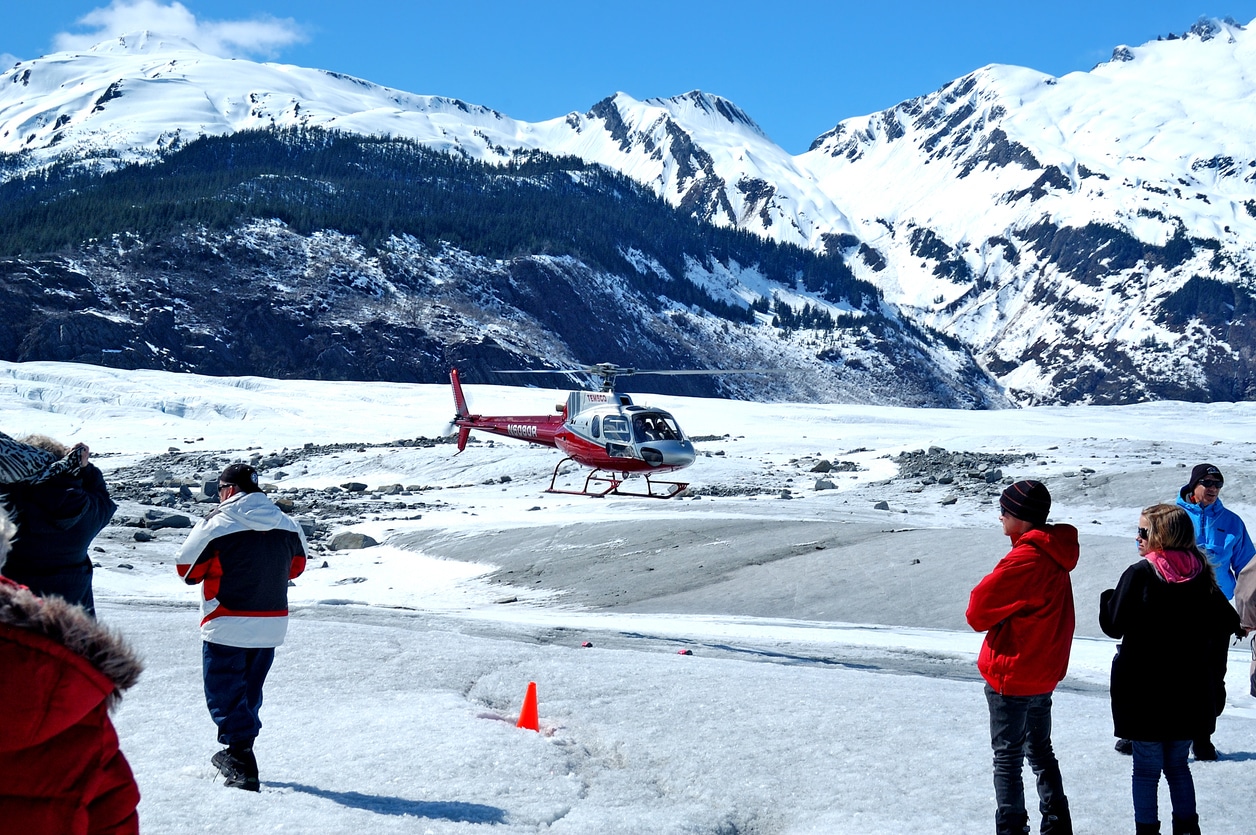
  • Helicopter Tour Over the Glaciers – Juneau, Alaska

    Helicopter Tour Over the Glaciers – Juneau, Alaska

    Red helicopter landed on a snowy glacier in Juneau, Alaska, with visitors standing nearby against rugged mountain scenery.
    A helicopter lands on a snowy glacier outside Juneau, giving visitors an unforgettable up‑close look at Alaska’s icefields.

    A helicopter tour over the glaciers in Juneau is one of the most unforgettable experiences in Alaska, offering breathtaking aerial views of the Juneau Icefield, towering peaks, deep crevasses, and shimmering blue ice. A helicopter tour over the glaciers gives travelers a rare chance to see Alaska’s frozen wilderness from above — and often includes a landing on a remote glacier for photos, exploration, and once‑in‑a‑lifetime memories.

    Fun Facts

    • The Juneau Icefield spans 1,500+ square miles and feeds over 40 glaciers.
    • Many tours land on Herbert, Mendenhall, or Taku Glacier.
    • Taku Glacier is one of the few advancing glaciers in the world.
    • Helicopters provide access to areas unreachable by foot or boat.
    • Glacial ice can appear vivid blue due to extreme compression.
    • Some tours include dog sledding on the glacier during summer.
    • Pilots often narrate geology, climate, and glacier movement.
    • The icefield is thousands of feet thick in some areas.

    What to Expect During Your Visit

    Your adventure begins with a safety briefing and gear fitting before boarding a small helicopter. As you lift off, you’ll soar above rainforest, mountains, and finally the massive expanse of the Juneau Icefield. The views are spectacular — jagged peaks, deep crevasses, and endless fields of ice.

    If your tour includes a glacier landing, you’ll step out onto the ice for photos, exploration, and a chance to feel the scale of the landscape beneath your feet. Guides explain glacial features, safety, and the history of the icefield.

    Most tours last 2–2.5 hours, including flight time and glacier landing.

    Why It’s Worth Visiting

    A helicopter tour over the glaciers is perfect for travelers who want a bucket‑list, high‑impact adventure with jaw‑dropping scenery. It’s one of the most memorable excursions in Juneau and a highlight for many Alaska cruise travelers.

    Where It’s Located

    Tours depart from the Juneau International Airport area, about 7 miles from downtown.

    How to Get There From the Cruise Port

    • Shuttle: Most helicopter tours include round‑trip transportation.
    • Taxi or rideshare: Quick and convenient.
    • Car rental: Ideal if you’re combining multiple attractions.
    • Bike: Possible but not recommended due to distance and traffic.

    Best Time to Visit

    • June–August offers the most reliable flying conditions.
    • Morning flights often have the best visibility.
    • Midday provides bright light for photography.
    • Early season (May–June) is ideal for dog‑sledding tours.

    Tips for Visiting

    • Wear layers — it’s colder on the glacier.
    • Bring sunglasses — the ice reflects sunlight.
    • Wear the provided boots or overshoes for traction.
    • Keep your camera ready — the views change quickly.
    • Book early — helicopter tours sell out fast.
    • Be flexible — weather delays are common in Southeast Alaska.

    Common Complaints

    • Tours can be expensive — but most travelers say it’s worth it.
    • Weather cancellations happen frequently.
    • Limited time on the glacier for some tours.
    • Weight limits may apply for safety.

    Final Thoughts

    A helicopter tour over the glaciers is one of the most spectacular and memorable experiences in Juneau. With sweeping aerial views, glacier landings, and dramatic icefield scenery, a helicopter tour over the glaciers is a must‑visit for cruise travelers who want a true once‑in‑a‑lifetime Alaska adventure.

    For more ideas to plan your day, explore my full guide to the top things to do in Juneau.

  • Kayak in Auke Bay – Juneau, Alaska

    Kayak in Auke Bay – Juneau, Alaska

    Harbor boats and calm water in Auke Bay with snow‑covered mountains and Mendenhall Glacier visible in the distance.
    Auke Bay stretches out toward Mendenhall Glacier, offering calm waters and incredible views for a memorable kayaking day.

    Kayaking in Auke Bay is one of the most peaceful and scenic ways to experience Juneau’s coastal beauty. With calm, protected waters, mountain views, and the chance to spot seals, eagles, and porpoises, a kayak in Auke Bay gives travelers a quiet, immersive adventure just minutes from Mendenhall Glacier and the Juneau ferry terminal.

    Fun Facts

    • Auke Bay sits at the edge of the Tongass National Forest, surrounded by mountains and islands.
    • The bay is home to harbor seals, porpoises, sea lions, and bald eagles.
    • On clear days, you can see Mendenhall Glacier from the water.
    • The water is typically calmer than the open fjords, making it ideal for beginners.
    • Many tours use stable double kayaks for comfort and ease.
    • Auke Bay is a major hub for marine research and the University of Alaska Southeast.
    • The bay connects to Favorite Channel, a route used by migrating whales.
    • Sunrise and sunset paddles offer especially beautiful light.

    What to Expect During Your Visit

    Your tour begins at Auke Bay Harbor, where guides provide gear, safety instructions, and paddling basics. Once on the water, you’ll glide past rocky shorelines, forested islands, and quiet coves. Wildlife sightings are common — seals often pop up nearby, and eagles perch in the trees along the shore.

    The pace is relaxed, with plenty of time for photos and interpretation from your guide. The scenery is classic Southeast Alaska: deep blue water, evergreen forests, and snow‑tipped peaks.

    Most tours last 2–2.5 hours.

    Why It’s Worth Visiting

    Kayaking in Auke Bay is perfect for travelers who want a calm, scenic, and beginner‑friendly paddling experience. It’s quieter than whale‑watching boats and offers a peaceful way to enjoy Juneau’s coastal landscape.

    Where It’s Located

    Auke Bay is located about 12 miles north of downtown Juneau, near the ferry terminal and the University of Alaska Southeast.

    How to Get There From the Cruise Port

    • Shuttle: Most kayak tours include round‑trip transportation.
    • Taxi or rideshare: Quick and convenient.
    • Car rental: Ideal if you’re exploring multiple attractions.
    • Bike: Possible, but the route is long and includes hills.

    Best Time to Visit

    • June–August offers the calmest water and warmest temperatures.
    • Morning tours often have the smoothest conditions.
    • Midday provides bright light for photography.
    • Evening paddles offer beautiful golden light.

    Tips for Visiting

    • Wear layers — it’s cooler on the water.
    • Bring a waterproof phone case or GoPro for photos.
    • Choose a double kayak if you want extra stability.
    • Watch the shoreline — seals often rest on nearby rocks.
    • Combine with Mendenhall Glacier or Macaulay Salmon Hatchery for a north‑Juneau day.

    Common Complaints

    • Wildlife sightings vary by day.
    • Weather can be chilly or misty.
    • Some guests find paddling more tiring than expected.
    • Space in kayaks can feel snug with full gear.

    Final Thoughts

    Kayaking in Auke Bay is one of the most peaceful and scenic outdoor experiences in Juneau. With calm water, mountain views, and the chance to spot seals and eagles, a kayak in Auke Bay is a must‑visit for cruise travelers who want a quiet, immersive adventure on the water. For more ideas to plan your day, explore my full guide to the top things to do in Juneau.

  • Historic Treadwell Mine – Juneau, Alaska

    Historic Treadwell Mine – Juneau, Alaska

    Weathered wooden pilings and an old concrete structure standing along the shoreline at the Treadwell Mine ruins in Juneau, Alaska.
    Treadwell Mine’s coastal ruins in Juneau, Alaska, reveal the remnants of a once‑booming gold mining operation now reclaimed by the tides and mist.

    The Historic Treadwell Mine is one of Juneau’s most atmospheric and quietly powerful historic sites — a place where moss‑covered forest, coastal scenery, and the remnants of a once‑booming gold‑mining empire blend into a peaceful, reflective experience. The ruins sit along the shoreline of Douglas Island, where the foundations of old buildings, rusted machinery, and interpretive signs help you imagine what life was like when more than 2,000 people lived and worked in this bustling company town. The combination of history, nature, and solitude makes this trail one of Juneau’s most rewarding off‑the‑beaten‑path stops.

    Fun Facts

    • The Treadwell Mine complex operated from 1882 to 1917, producing enormous quantities of gold during its peak years.
    • At one time, it was one of the largest gold‑mining operations in the world, employing over 2,000 workers.
    • The site included four separate mines: Treadwell, 700‑Foot, Mexican, and Ready Bullion.
    • A dramatic collapse in 1917 occurred when underground tunnels flooded, causing major portions of the mine to give way.
    • The company town once had homes, a hospital, a clubhouse, and even a natatorium — a rare luxury for a remote mining community.
    • Many foundations and structures remain visible along the trail, offering a glimpse into daily life during the mining boom.
    • Interpretive signs throughout the trail share stories of miners, operations, and the collapse that ended the mine’s era.
    • The shoreline provides beautiful views of Gastineau Channel and downtown Juneau.

    What to Expect During Your Visit

    The Treadwell Mine Trail is an easy, mostly flat walk through a lush, moss‑draped forest where nature has slowly reclaimed the remains of the mining town. As you wander, you’ll pass concrete foundations, rusted equipment, and remnants of buildings that once supported the massive mining operation. Interpretive signs explain what each structure was used for and share stories of the people who lived here. The trail eventually opens to the shoreline, where the remains of the old pump house sit against sweeping views of the channel. The atmosphere is quiet and contemplative, making it a wonderful place for photography, slow exploration, and connecting with Juneau’s past. Most visitors spend 45–75 minutes here.

    Why It’s Worth Visiting

    The Historic Treadwell Mine is perfect for travelers who enjoy history, light hiking, and peaceful, uncrowded experiences. It offers a completely different perspective on Juneau — one rooted in the city’s early industrial past rather than its modern tourism scene. The trail is scenic, educational, and refreshingly calm compared to Juneau’s major attractions. If you want a meaningful stop that blends nature and history without requiring a tour or long travel time, Treadwell is an excellent choice.

    Where It’s Located

    The trail sits on Douglas Island, about 4 miles from downtown Juneau. The location feels tucked away but is still close enough to pair easily with other Juneau activities.

    How to Get There From the Cruise Port

    • Taxi or rideshare: The quickest and easiest option.
    • Car rental: Ideal if you’re exploring multiple Juneau attractions.
    • Bike: A scenic ride across the bridge to Douglas Island.
    • Shuttle: Some tours include transportation.

    Best Time to Visit

    • Morning: Quiet trails and soft, atmospheric light.
    • Midday: Bright conditions for shoreline photography.
    • Summer (June–August): Best trail conditions.
    • Fall: Crisp air and colorful foliage.

    Tips for Visiting

    • Wear comfortable walking shoes — the trail is easy but natural.
    • Bring a camera for the ruins and coastal views.
    • Read the interpretive signs to understand the mine’s history.
    • Watch for bald eagles along the channel.
    • Combine with a visit to downtown Juneau or Douglas Island viewpoints.

    Common Complaints

    • Some visitors expect a more formal museum experience.
    • Ruins are spread out, and not all structures remain intact.
    • Trails can be muddy after rain.
    • Limited signage at the trailhead.

    Final Thoughts

    The Historic Treadwell Mine is one of Juneau’s most atmospheric hidden gems — a peaceful blend of forest, shoreline, and historic ruins that tells the story of a once‑thriving mining community. It’s a rewarding stop for cruise travelers who want a quieter, more reflective experience away from the crowds. With its scenic trails, interpretive signs, and dramatic history, Treadwell offers a meaningful look at the people and industry that helped shape early Juneau.

    For more ideas to plan your day, explore my full guide to the top things to do in Juneau.

  • Glacier Gardens Rainforest Adventure – Juneau, Alaska

    Glacier Gardens Rainforest Adventure – Juneau, Alaska

    Colorful flowers overflowing from elevated planters made from tall tree trunks in the rainforest gardens of Juneau, Alaska.
    Glacier Gardens’ signature upside‑down trees rise tall in Juneau, Alaska, bursting with vibrant summer blooms.

    Glacier Gardens Rainforest Adventure is one of the most unique and visually stunning attractions in Juneau, offering a blend of botanical gardens, rainforest scenery, and panoramic mountain views. A visit to Glacier Gardens Rainforest Adventure gives travelers a peaceful, colorful escape into the Tongass National Forest, complete with guided tours, dramatic “upside‑down trees,” and breathtaking overlooks of Juneau and the Gastineau Channel.

    Fun Facts

    • The gardens were created by Steve Bowhay, who invented the famous “upside‑down flower towers.”
    • Glacier Gardens sits within the Tongass National Forest, the largest temperate rainforest in the world.
    • The upside‑down trees are made from recycled Sitka spruce, turned root‑side up and filled with flowers.
    • The property covers 50 acres of rainforest, streams, and botanical displays.
    • Guided tours take visitors up to a 700‑foot overlook with sweeping views of Juneau.
    • The gardens feature hanging baskets, ponds, waterfalls, and vibrant floral displays.
    • The site was originally restored after a major landslide in the 1980s.
    • Glacier Gardens is one of the most photographed garden attractions in Alaska.

    What to Expect During Your Visit

    Your visit begins with a guided tour aboard an open‑air vehicle that winds through lush rainforest, past waterfalls, moss‑covered trees, and the famous upside‑down flower towers. Guides share stories about the garden’s creation, local ecology, and the restoration of the land.

    At the top, you’ll step out at a scenic overlook with panoramic views of Juneau, the airport, and the Gastineau Channel — a highlight for many visitors. After the tour, you can explore the lower gardens, ponds, and floral displays at your own pace.

    Most travelers spend 60–90 minutes here.

    Why It’s Worth Visiting

    Glacier Gardens Rainforest Adventure is perfect for travelers who want a peaceful, colorful, and unexpected experience in Juneau. It’s ideal for photography, relaxing strolls, and anyone who appreciates gardens, rainforest scenery, or unique attractions.

    Where It’s Located

    The gardens are located about 7 miles from downtown Juneau, near the Juneau International Airport.

    How to Get There From the Cruise Port

    • Shuttle: Many tours include round‑trip transportation.
    • Taxi or rideshare: Quick and convenient.
    • Car rental: Ideal if you’re exploring multiple attractions.
    • Bike: Possible, but the route includes hills.

    Best Time to Visit

    • June–August offers peak blooms and lush greenery.
    • Morning provides soft light for photography.
    • Midday is great for bright floral colors.
    • Rainy days enhance the rainforest atmosphere.

    Tips for Visiting

    • Bring a camera — the flower towers and overlooks are stunning.
    • Wear layers — the rainforest can be cool and damp.
    • Take your time exploring the lower gardens after the tour.
    • Look for eagles soaring above the overlook.
    • Combine with Mendenhall Glacier for a nature‑themed day.

    Common Complaints

    • Tours can feel short for some visitors.
    • The overlook may be foggy on cloudy days.
    • Shuttle schedules vary by operator.
    • Some guests expect a larger botanical garden layout.

    Final Thoughts

    Glacier Gardens Rainforest Adventure is one of the most beautiful and unexpected attractions in Juneau. With vibrant floral displays, lush rainforest scenery, and sweeping mountain views, Glacier Gardens Rainforest Adventure is a must‑visit for cruise travelers who want a peaceful, colorful escape into nature.

    For more ideas to plan your day, explore my full guide to the top things to do in Juneau.

  • Macaulay Salmon Hatchery – Juneau, Alaska

    Macaulay Salmon Hatchery – Juneau, Alaska

    Salmon leaping through rushing water at a hatchery fish ladder in Juneau, Alaska.
    A salmon fights its way up the hatchery’s fish ladder, showcasing the powerful upstream journey these fish make each season.

    The Macaulay Salmon Hatchery is one of the most educational and wildlife‑rich attractions in Juneau, offering visitors an up‑close look at Alaska’s salmon lifecycle, marine creatures, and hatchery operations. A visit to the Macaulay Salmon Hatchery gives travelers a chance to see salmon swimming, jumping, and returning to spawn, along with touch tanks, aquariums, and exhibits that explain how hatcheries support Alaska’s fisheries.

    Fun Facts

    • Operated by Douglas Island Pink and Chum, Inc. (DIPAC), a nonprofit organization.
    • The hatchery releases over 100 million salmon each year.
    • Species include chum, king, coho, and sockeye salmon.
    • The fish ladder becomes a dramatic sight in late summer, when salmon return to spawn.
    • The facility includes a saltwater aquarium with local marine species.
    • Touch tanks allow visitors to feel starfish, sea cucumbers, and anemones.
    • Bald eagles and seals often gather near the outflow to feed on returning salmon.
    • The hatchery plays a major role in supporting commercial and sport fisheries in Southeast Alaska.

    What to Expect During Your Visit

    Inside the hatchery, visitors can explore exhibits explaining the salmon lifecycle, hatchery operations, and Alaska’s fishing industry. Large viewing windows reveal salmon swimming through the fish ladder, especially during peak season. The aquarium area showcases local marine life, while the touch tanks are a hit with kids and adults alike.

    Outside, you may spot seals, sea lions, or eagles feeding near the water — a natural bonus to the educational experience.

    Most travelers spend 45–60 minutes here.

    Why It’s Worth Visiting

    The Macaulay Salmon Hatchery is perfect for travelers who want a hands‑on, educational experience that blends wildlife, science, and culture. It’s easy, family‑friendly, and ideal for pairing with other Juneau attractions.

    Where It’s Located

    The hatchery is located about 3 miles north of downtown Juneau, along Channel Drive.

    How to Get There From the Cruise Port

    • Shuttle: Many tours include transportation.
    • Taxi or rideshare: Quick and convenient.
    • Car rental: Ideal if you’re exploring multiple attractions.
    • Bike: A scenic ride along the waterfront path.

    Best Time to Visit

    • Late July–September is peak salmon‑return season.
    • Morning offers quieter galleries.
    • Midday is great for outdoor wildlife activity.
    • Rainy days are perfect — most exhibits are indoors.

    Tips for Visiting

    • Visit in late summer for the most dramatic fish ladder activity.
    • Bring a camera — seals and eagles often appear near the outflow.
    • Spend time at the touch tanks for a hands‑on experience.
    • Combine with Mendenhall Glacier or Auke Bay for a full wildlife‑themed day.
    • Check the gift shop for locally made salmon products.

    Common Complaints

    • Salmon activity is seasonal — quieter outside late summer.
    • The facility can feel crowded when multiple tours arrive.
    • Some visitors expect a larger aquarium.
    • Limited outdoor viewing during heavy rain.

    Final Thoughts

    The Macaulay Salmon Hatchery is one of the most educational and wildlife‑focused attractions in Juneau. With salmon viewing, marine exhibits, and the chance to see seals and eagles up close, the Macaulay Salmon Hatchery is a must‑visit for cruise travelers who want a deeper understanding of Alaska’s fisheries and marine ecosystem.

    For more ideas to plan your day, explore my full guide to the top things to do in Juneau.

error: Content is protected !!