Tag: Alaska wildlife tours

  • Bear‑Viewing Tour – Icy Strait Point, Alaska

    Bear‑Viewing Tour – Icy Strait Point, Alaska

    Moss‑covered spruce branches in the Tongass National Forest near Icy Strait Point, showing the type of forested habitat where black bears are often found.
    The mossy spruce forests around Icy Strait Point create ideal habitat for black bears, making this region one of the best places in Southeast Alaska for guided bear‑viewing tours.

    Bear‑viewing tours at Icy Strait Point take visitors deep into the forests and river valleys around Hoonah, where brown bears forage, roam, and fish during the summer months. These guided excursions typically travel to the Spasski River Valley, one of the best wildlife habitats in the region. Elevated boardwalks and viewing platforms allow visitors to safely observe bears in their natural environment while learning about the ecosystem from knowledgeable local guides.

    For cruise travelers, this is a rewarding, nature‑focused adventure that offers a real chance to see Alaska’s brown bears in the wild.

    Fun Facts

    • The Spasski River Valley is home to brown bears, Sitka black‑tailed deer, and bald eagles.
    • Elevated platforms help protect both visitors and wildlife.
    • Bears are most active during salmon season, when they feed along the river.
    • The area is part of the Tongass National Forest, the largest temperate rainforest in the world.
    • Tours are guided by locals who share insights into Tlingit culture and wildlife behavior.
    • The drive to the viewing area offers scenic forest and mountain views.
    • Bear sightings are common but never guaranteed — it’s true wilderness.
    • The boardwalk system minimizes environmental impact and keeps the habitat healthy.

    What to Expect During Your Visit

    Most bear‑viewing tours begin with a narrated drive from Icy Strait Point into the forested interior of Chichagof Island. Once at the Spasski River Valley, visitors walk along a series of elevated boardwalks that lead to multiple viewing platforms overlooking meadows, streams, and forest edges.

    Guides point out wildlife, explain bear behavior, and share stories about the region’s ecology and Tlingit heritage. Depending on the season, you may see bears feeding, wandering through the grass, or moving along the riverbanks.

    Most tours last 2.5–3 hours.

    Why It’s Worth Visiting

    This tour is perfect for travelers who want a wildlife‑focused experience that’s accessible, safe, and deeply connected to the natural environment. The scenery is beautiful, the guides are knowledgeable, and the chance to see brown bears in the wild is unforgettable.

    Where It’s Located

    Bear‑viewing tours typically take place in the Spasski River Valley, about 30 minutes from Icy Strait Point.

    How to Get There From the Cruise Port

    • Tour vehicle: All excursions include transportation from Icy Strait Point.
    • Shuttle: Not needed — pickup is included.
    • Walking: Not possible; the viewing area is inland.

    Best Time to Visit

    • July–September is peak bear‑viewing season.
    • Midday often brings more wildlife movement.
    • Late summer offers the best chance to see bears feeding on salmon.
    • Early season may offer sightings of mothers with cubs.

    Tips for Visiting

    • Wear comfortable walking shoes — the boardwalks are easy but can be damp.
    • Bring binoculars or a zoom lens for better viewing.
    • Dress in layers — the forest can be cool and breezy.
    • Stay quiet on the platforms to avoid disturbing wildlife.
    • Listen to your guide — they know the area and bear behavior well.
    • Book early — wildlife tours often sell out on cruise days.

    Common Complaints

    • Bear sightings are not guaranteed.
    • Weather can be rainy or cool.
    • The drive can feel long if wildlife is scarce.
    • Platforms may feel crowded when multiple groups arrive at once.

    Final Thoughts

    A bear‑viewing tour at Icy Strait Point is one of the most rewarding wildlife experiences in Southeast Alaska. With elevated platforms, knowledgeable guides, and the chance to see brown bears in their natural habitat, it’s a must‑do for nature lovers and adventure‑seeking cruise travelers.

    For more ideas to plan your day, explore my full guide to the top things to do at Icy Strait Point.

  • Whale Watching in Icy Strait – Icy Strait Point, Alaska

    Whale Watching in Icy Strait – Icy Strait Point, Alaska

    Humpback whales bubble‑net feeding in Icy Strait near Hoonah, Alaska
    Humpback whales bubble‑net feeding in the waters of Icy Strait near Hoonah, Alaska.

    Whale watching in Icy Strait is one of the most unforgettable wildlife experiences in Alaska. The waters around Icy Strait Point and Hoonah are rich with marine life, especially humpback whales that feed in the nutrient‑dense channels throughout summer. Many tours also spot sea lions, sea otters, harbor porpoises, and bald eagles — with occasional sightings of orcas.

    For cruise travelers, Icy Strait is considered one of the best whale‑watching ports in Alaska, thanks to calm waters, abundant whales, and short travel times to prime viewing areas.

    Fun Facts

    • Icy Strait is one of the most reliable places in Alaska to see humpback whales.
    • Humpbacks migrate thousands of miles from Hawaii and Mexico to feed here each summer.
    • Whales use bubble‑net feeding, a cooperative hunting technique rarely seen elsewhere.
    • Orcas occasionally pass through the strait in small pods.
    • Many tours operate in protected waters, making the ride smoother than other ports.
    • Sea otters, sea lions, and porpoises are commonly spotted.
    • Bald eagles often perch along the shoreline during tours.
    • Some tours use small boats for closer, more intimate wildlife viewing.

    What to Expect During Your Visit

    Most whale‑watching tours depart directly from the Icy Strait Point dock or nearby Hoonah harbor. Boats travel only a short distance before reaching prime whale‑feeding areas, so sightings often begin quickly.

    Expect to see humpbacks surfacing, tail‑slapping, and occasionally breaching. Guides share information about whale behavior, local ecology, and the history of the area. The experience is smooth, scenic, and suitable for all ages.

    Most tours last 2–3 hours.

    Why It’s Worth Visiting

    Whale watching in Icy Strait offers some of the highest sighting success rates in Alaska. The scenery is stunning, the waters are calm, and the whales are active throughout summer. It’s a must‑do for wildlife lovers, photographers, and families.

    Where It’s Located

    Tours depart from Icy Strait Point or the nearby Hoonah harbor, depending on the operator.

    How to Get There From the Cruise Port

    • Walk: Many tours meet right at the Icy Strait Point dock.
    • Shuttle: Some independent operators pick up at the port.
    • Taxi: Quick ride into Hoonah if your tour departs from town.
    • Gondola: Not required for whale watching but fun to pair with your day.

    Best Time to Visit

    • June–September is peak whale‑watching season.
    • July and August offer the most consistent sightings.
    • Morning tours often have calmer water.
    • Midday provides bright light for photography.

    Tips for Visiting

    • Bring a zoom lens or binoculars for the best views.
    • Wear layers — it’s cooler on the water.
    • Choose a small‑group boat if you want closer wildlife encounters.
    • Book early — whale tours often sell out on cruise days.
    • Keep your camera ready — humpbacks surface quickly.

    Common Complaints

    • Weather can be chilly or rainy.
    • Some boats feel crowded during peak season.
    • Wildlife sightings are never guaranteed (though Icy Strait is very reliable).
    • Motion sickness can affect sensitive travelers on windy days.

    Final Thoughts

    Whale watching in Icy Strait is one of the most rewarding wildlife experiences in Alaska. With abundant humpbacks, calm waters, and stunning scenery, it’s a must‑do excursion for cruise travelers visiting Icy Strait Point.

    For more ideas to plan your day, explore my full guide to the top things to do at Icy Strait Point.

  • Kenai Fjords National Park Wildlife & Glacier Cruise – Seward, Alaska

    Kenai Fjords National Park Wildlife & Glacier Cruise – Seward, Alaska

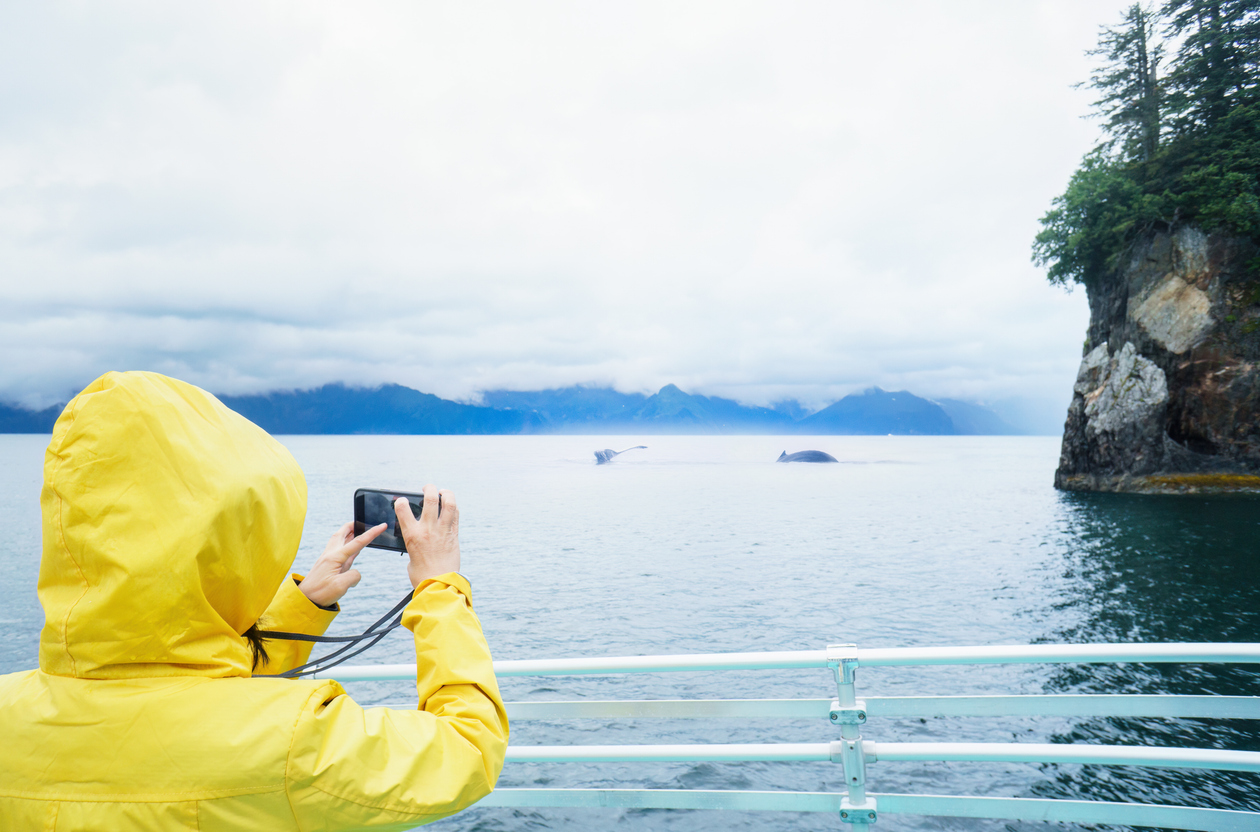
    A tourist photographs whales swimming near the boat during a wildlife cruise in Kenai Fjords National Park in Seward, Alaska.
    A visitor captures the moment as whales surface near the tour boat, a classic highlight of wildlife cruises in Kenai Fjords National Park.

    A wildlife and glacier cruise in Kenai Fjords National Park is the signature experience in Seward — and one of the most spectacular excursions in all of Alaska. These cruises travel through dramatic fjords carved by ancient ice, offering close‑up views of tidewater glaciers, towering cliffs, and abundant marine wildlife. Humpback whales, orcas, sea otters, puffins, sea lions, and porpoises are commonly seen, often at breathtakingly close range.

    For cruise travelers, this is a high‑impact, bucket‑list adventure that delivers nonstop scenery and unforgettable wildlife encounters. It’s the perfect way to experience the raw, wild beauty of Alaska’s coastline.

    Fun Facts

    • Kenai Fjords National Park protects over 600,000 acres of glaciers, fjords, and coastal wilderness.
    • The park is home to the Herman, Holgate, and Aialik Glaciers, some of the most active tidewater glaciers in Alaska.
    • Wildlife cruises often spot humpback whales, transient orcas, and Dall’s porpoises.
    • The cliffs along the fjords host thousands of nesting seabirds, including puffins and murres.
    • The park’s massive Harding Icefield feeds more than 30 glaciers.
    • Sea otters float in groups called rafts, sometimes with dozens resting together.
    • Orcas in this region belong to distinct resident and transient pods, each with unique behaviors.
    • Many cruises use smaller vessels, allowing closer views of wildlife and glaciers.

    What to Expect During Your Visit

    Your cruise begins in Seward’s small boat harbor and heads into the rugged coastline of Kenai Fjords National Park. As the boat travels through narrow fjords, you’ll see steep cliffs, waterfalls, and dense coastal rainforest. Naturalists onboard point out wildlife, explain glacier geology, and share stories about the region.

    The highlight is reaching a tidewater glacier. The captain often stops the boat at a safe distance so you can watch for calving — when massive chunks of ice break off and crash into the water. The sound is thunderous and unforgettable.

    Throughout the cruise, you’ll scan the water for whales, otters, porpoises, and seabirds. The experience is immersive, scenic, and full of photo opportunities. Most tours last 4–6 hours, depending on the route.

    Why It’s Worth Visiting

    A Kenai Fjords cruise is perfect for travelers who want a dramatic, high‑reward adventure that showcases Alaska’s wild coastline. The combination of glaciers, wildlife, and fjord scenery makes this one of the most memorable excursions in the state. It’s ideal for photographers, families, and anyone who wants a true “Alaska moment.”

    Where It’s Located

    Cruises depart from the Seward Small Boat Harbor, located along the waterfront near downtown Seward.

    How to Get There From the Cruise Port

    • Walk: 10–15 minutes from the cruise dock.
    • Shuttle: Many cruise lines offer a short shuttle to the harbor.
    • Taxi: Quick and convenient if you prefer not to walk.
    • Excursion transport: Included with most booked tours.

    Best Time to Visit

    • June–August offers the best wildlife activity and calmest seas.
    • May–June provides excellent whale sightings and early‑season glacier views.
    • Morning cruises often have smoother water and better visibility.
    • Late summer brings peak puffin activity and vibrant coastal colors.

    Tips for Visiting

    • Dress in warm layers — it’s colder on the water, even in summer.
    • Bring a camera with zoom for wildlife and glacier shots.
    • Choose a longer cruise for the best chance of reaching tidewater glaciers.
    • Sit outside when possible — you’ll see more wildlife.
    • Bring motion‑sickness medication if you’re sensitive to waves.
    • Listen to the naturalist — their wildlife spotting skills are incredible.

    Common Complaints

    • Weather can be windy or rainy, especially in early summer.
    • Seas may feel rough on certain days.
    • Wildlife sightings vary, though otters and seabirds are almost always seen.
    • Longer cruises may feel chilly if you’re not dressed warmly.

    Final Thoughts

    A Kenai Fjords National Park wildlife and glacier cruise is the ultimate Seward experience — dramatic, wild, and unforgettable. With towering glaciers, abundant wildlife, and breathtaking fjord scenery, it’s a must‑do adventure for any Alaska cruise traveler.

    For more ideas to plan your day, explore my full guide to the top things to do in Seward.

error: Content is protected !!