Category: Sitka, Alaska

Sitka blends Russian heritage, Indigenous culture, and stunning coastal scenery. Visitors can explore Sitka National Historical Park, see rescued wildlife at the Alaska Raptor Center, or kayak through pristine waters. The town’s unique mix of history and nature makes it a standout destination for cruisers looking for a well-rounded experience.

  • Sitka Alaska Cruise Port Guide: Top Things to Do for Cruise Travelers

    Sitka Alaska Cruise Port Guide: Top Things to Do for Cruise Travelers

    A forested Sitka coastline with houses along the shore, deep blue water, and snow‑capped mountains rising in the background under a clear sky.
    Sitka’s forested shoreline and snow‑capped mountains create one of the most beautiful coastal views in Southeast Alaska.

    Sitka is one of Alaska’s most culturally rich and naturally beautiful cruise ports, blending Indigenous Tlingit heritage, Russian history, and dramatic coastal scenery. This Sitka Alaska Cruise Port Guide highlights why so many travelers consider it a standout destination, with opportunities to explore wildlife, forests, museums, and historic sites all within easy reach of the port. Surrounded by mountains, islands, and the waters of Sitka Sound, the town offers a welcoming mix of culture, nature, and small‑town charm.

    This Sitka Alaska Cruise Port Guide highlights the top experiences that showcase the best of this unique Alaska destination.

    Below, you’ll find the top experiences that showcase the best of Sitka during a cruise‑port day.

    1. Explore Sitka National Historical Park

    Sitka National Historical Park on a summer day, offering coastal trails, guided tours, cultural demonstrations, and exhibits about Tlingit and Russian history in Sitka, Alaska.
    Sitka National Historical Park features coastal trails, guided programs, and cultural demonstrations that highlight both Tlingit and Russian heritage.

    Sitka National Historical Park is one of the most meaningful places to visit in the port, blending Tlingit culture, Russian history, and peaceful forest scenery. The park’s coastal trails wind through towering spruce and hemlock trees, with carved totem poles placed along the paths to honor Tlingit heritage. Inside the visitor center, exhibits and demonstrations highlight traditional carving, weaving, and storytelling. The park is easy to reach from downtown and offers a calm, reflective experience that contrasts beautifully with Alaska’s more rugged excursions. It’s an essential stop for travelers who want cultural depth and scenic beauty in one place. For tips, timing, and planning details, see my complete Sitka National Historical Park guide.

    2. Visit the Alaska Raptor Center

    A peregrine falcon with blue‑grey plumage and barred underparts at the Alaska Raptor Center in Sitka, Alaska, one of the wildlife highlights featured in our Alaska Raptor Center – Sitka, Alaska post.
    The Alaska Raptor Center in Sitka, Alaska, rehabilitates birds of prey like the peregrine falcon, a key feature of our Alaska Raptor Center – Sitka, Alaska guide.

    The Alaska Raptor Center is one of Sitka’s most popular wildlife experiences. It rehabilitates injured eagles, owls, and other birds of prey. Visitors can watch training sessions and see how the staff cares for each bird. The outdoor flight area lets eagles strengthen their wings before release. Exhibits explain how the center rescues, treats, and prepares birds to return to the wild. The setting is peaceful, with forest views and quiet walking paths. The visit is educational, inspiring, and easy to fit into a cruise‑port day. It’s a great stop for travelers who enjoy wildlife and want to support meaningful conservation work.

    For tips, timing, and planning details, see my complete Alaska Raptor Center guide.

    3. Explore the Sitka Sound Science Center & Aquarium

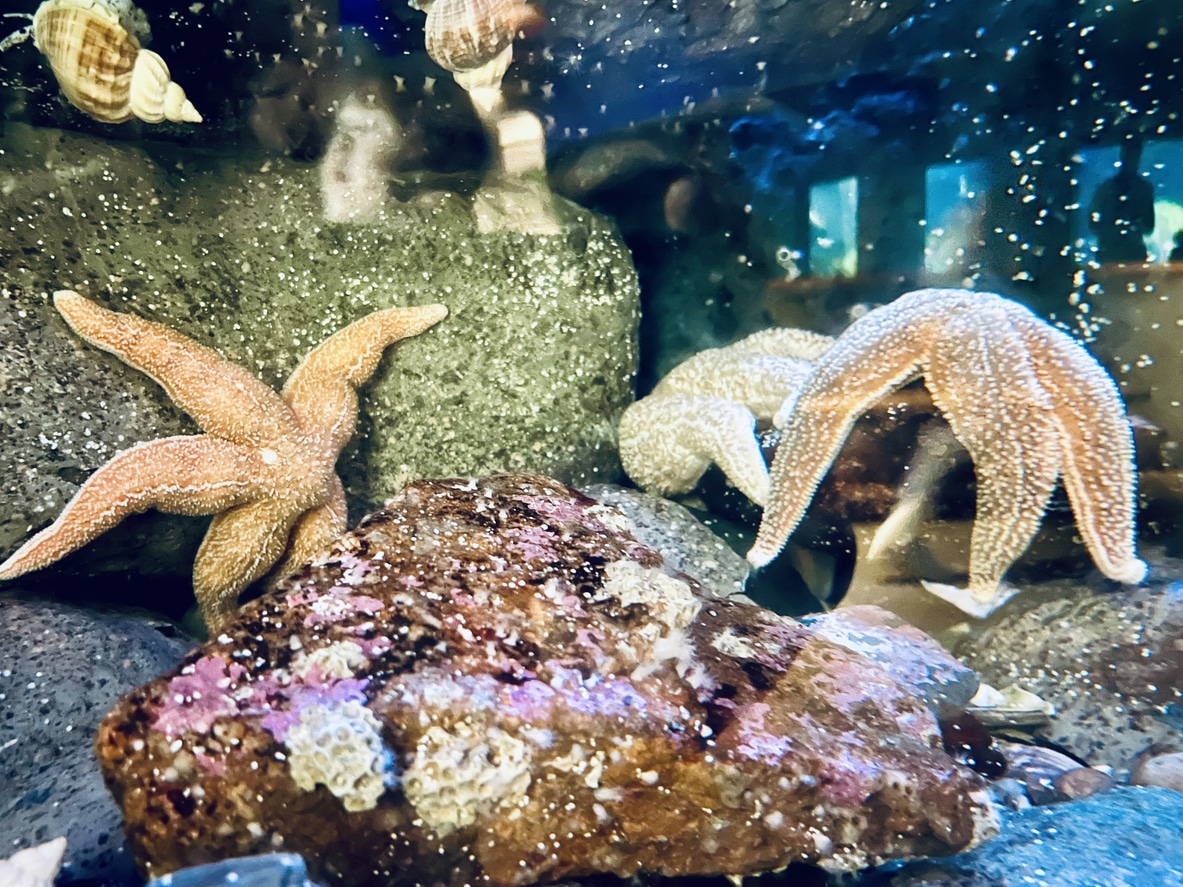
    Three colorful starfish resting in an aquarium tank with rocks and shells, similar to the touch‑tank exhibits at the Sitka Sound Science Center & Aquarium in Sitka, Alaska.
    Starfish are a favorite feature of the touch‑tank exhibits at the Sitka Sound Science Center & Aquarium, where visitors can explore Alaska’s coastal marine life up close.

    The Sitka Sound Science Center offers a close look at Alaska’s coastal marine life. It sits along the waterfront and is easy to reach from downtown. Inside, visitors can explore touch tanks, see local fish species, and learn about the ecosystems that shape Sitka Sound. The center also operates a working hatchery, which gives guests a behind‑the‑scenes look at salmon research and conservation. Exhibits are simple, hands‑on, and great for all ages. The location makes it easy to pair with a walk through Sitka National Historical Park. It’s a relaxed, educational stop that fits well into a cruise‑port day.

    For tips, timing, and planning details, see my complete Sitka Sound Science Center guide.

    4. Visit St. Michael’s Russian Orthodox Cathedral

    Saint Michael the Archangel Orthodox Cathedral in downtown Sitka, Alaska, shown from the exterior on a September day.
    Saint Michael the Archangel Orthodox Cathedral stands at the heart of downtown Sitka, one of the community’s most iconic Russian Orthodox landmarks.

    St. Michael’s Cathedral is one of Sitka’s most recognizable landmarks. Its green dome and traditional Russian Orthodox design stand out in the center of downtown. The building reflects Sitka’s long Russian‑American history and the cultural influences that shaped the community. Inside, visitors can view religious icons, historic artifacts, and beautifully crafted artwork. The space is small, so it’s easy to explore without taking much time. Its location makes it a convenient stop while browsing nearby shops and cafés. The cathedral offers a meaningful look at Sitka’s past and adds cultural depth to any visit.

    For tips, timing, and planning details, see my complete St. Michael’s Cathedral guide.

    5. Explore the Fortress of the Bear

    A grizzly bear at Fortress of the Bear in Sitka, Alaska, standing in its naturalistic enclosure at this brown‑bear rescue and rehabilitation center.
    A rescued grizzly bear at Fortress of the Bear, Sitka’s well‑known brown‑bear rehabilitation center and one of the community’s most popular wildlife experiences.

    Fortress of the Bear is one of Sitka’s most popular wildlife experiences. The center cares for rescued brown and black bears that cannot return to the wild. Visitors watch the bears from elevated platforms that offer clear, close‑up views. The habitats are large and naturalistic, giving the bears room to roam and play. Staff members share each bear’s rescue story and explain how the center supports long‑term care and conservation. The visit is educational, emotional, and easy to fit into a cruise‑port day. The facility is a short drive from downtown and pairs well with the Raptor Center or Sitka National Historical Park. It’s a great stop for travelers who enjoy wildlife and meaningful storytelling.

    For tips, timing, and planning details, see my complete Fortress of the Bear guide.

    6. Walk the Sitka Seawalk

    View of Sitka Sound from Sitka National Historical Park, with small forested islands, distant mountains, and coastal vegetation along the shoreline.
    View of Sitka Sound from Sitka National Historical Park, with small forested islands, distant mountains, and coastal vegetation along the shoreline.

    The Sitka Seawalk is a scenic, easy‑to‑navigate path that connects the cruise‑port area with downtown and several major attractions. Along the way, visitors enjoy views of Sitka Sound, nearby islands, and snow‑capped mountains. Benches, interpretive signs, and photo spots make the walk both relaxing and informative. The route passes by the Alaska Raptor Center trailhead, the Sitka Sound Science Center, and the entrance to Sitka National Historical Park, making it a perfect way to explore multiple highlights in one outing. It’s ideal for travelers who want a flexible, self‑guided activity close to the port. For tips, timing, and planning details, see my complete Sitka Seawalk guide.

    7. Take a Wildlife Cruise on Sitka Sound

    Harbor seals resting on a buoy in Sitka Sound, with calm water and coastal scenery surrounding this common wildlife sight in Sitka, Alaska.
    Harbor seals often haul out on buoys in Sitka Sound, offering wildlife cruise passengers an easy and memorable look at these curious marine mammals.

    Sitka Sound is one of the best places in Alaska for marine wildlife viewing, with opportunities to spot whales, sea otters, sea lions, puffins, and seabirds against a backdrop of volcanic islands and rugged coastline. Wildlife cruises range from short outings to longer explorations, making them easy to fit into a cruise‑port day. Many tours use smaller vessels, allowing for closer views and a more intimate experience with the scenery. The combination of calm waters, abundant wildlife, and dramatic landscapes makes this one of Sitka’s most memorable activities. For tips, timing, and planning details, see my complete Sitka wildlife cruise guide.

    8. Visit the Russian Bishop’s House

    The Russian Bishop’s House in Sitka National Historical Park, a two‑story yellow wooden building with white trim and red front steps, one of the best‑preserved examples of Russian colonial architecture in Alaska.
    The Russian Bishop’s House, with its yellow wood siding, white trim, and red steps, is one of Sitka’s most significant Russian‑era landmarks and a highlight within Sitka National Historical Park.

    The Russian Bishop’s House is one of the few surviving examples of Russian colonial architecture in North America. Restored by the National Park Service, the building offers a fascinating look at Sitka’s 19th‑century history through original rooms, artifacts, and exhibits. Visitors can learn about the Russian Orthodox Church’s influence in Alaska and the daily life of the people who lived and worked here. The house is located near downtown, making it an easy stop while exploring shops, cafés, and other historic sites. For tips, timing, and planning details, see my complete Russian Bishop’s House guide.

    9. Explore Downtown Sitka’s Shops, Cafés & Waterfront

    Historic Lincoln Street in downtown Sitka, Alaska, lined with shops and cafés in spring, with St. Michael’s Russian Orthodox Cathedral at the end of the street and mountains rising in the background.

    Sitka’s compact downtown is perfect for a relaxed stroll, offering locally owned shops, art galleries, and cafés with views of the harbor and surrounding mountains. Visitors can browse Tlingit artwork, sample local seafood, or simply enjoy the peaceful waterfront atmosphere. The area is walkable from the shuttle drop‑off point and connects easily to major attractions like St. Michael’s Cathedral and the Sitka Seawalk. It’s an ideal option for travelers who want a flexible, low‑key activity close to the port. For tips, timing, and planning details, see my complete Downtown Sitka guide.

    10. Visit Whale Park for Scenic Views

    A humpback whale diving off the coast of Sitka, Alaska, with its tail fluke lifting above the water in Sitka Sound.
    A humpback whale dives just off the coast of Sitka, a memorable sight for anyone scanning the waters from Whale Park.

    Whale Park is a small but scenic overlook located a short drive from downtown Sitka. Elevated platforms provide sweeping views of Sitka Sound, nearby islands, and snow‑capped mountains. It’s a peaceful spot for photography, wildlife watching, or simply enjoying the coastal scenery. Interpretive signs share information about local marine life, and visitors often spot sea otters or whales in the distance. The park’s quiet atmosphere makes it a refreshing break from busier port areas. For tips, timing, and planning details, see my complete Whale Park guide.

    Final Thoughts

    Sitka is one of Alaska’s most culturally rich and naturally stunning cruise ports, offering a rare blend of Tlingit heritage, Russian history, and breathtaking coastal scenery. This Sitka Alaska Cruise Port Guide gives you a strong foundation for planning your day, whether you’re exploring totem‑lined forest trails, visiting wildlife rehabilitation centers, or enjoying the peaceful waterfront. With so many top attractions located close to town, it’s easy to shape your visit around your interests and timing. No matter how you spend your day, Sitka delivers a memorable mix of culture, nature, and small‑town charm that stays with you long after your cruise ends.

  • Whale Park – Sitka, Alaska

    Whale Park – Sitka, Alaska

    A humpback whale diving off the coast of Sitka, Alaska, with its tail fluke lifting above the water in Sitka Sound.
    A humpback whale dives just off the coast of Sitka, a memorable sight for anyone scanning the waters from Whale Park.

    Whale Park is one of Sitka’s most peaceful and scenic coastal viewpoints. Located along the shoreline south of downtown, this small oceanside park offers sweeping views of Sitka Sound, frequent wildlife sightings, and a quiet place to enjoy the rugged beauty of Alaska. Visitors often spot humpback whales, sea otters, harbor seals, and bald eagles from the viewing platforms, especially during peak feeding seasons.

    For cruise travelers, Whale Park is an easy, low‑effort stop that delivers big scenery without needing a tour. It’s perfect for photography, wildlife watching, or simply enjoying a quiet moment by the water.

    Fun Facts

    • Whale Park sits along a deep‑water channel, making it a natural feeding area for humpback whales.
    • The park includes covered viewing shelters, which help on rainy days.
    • Sitka residents often visit the park during sunset, when the light hits the water beautifully.
    • The coastline here is part of the Tongass National Forest, the largest temperate rainforest in the world.
    • Sea otters frequently float in rafts, sometimes in groups of 20 or more.
    • The park’s rocky shoreline attracts harbor seals and seabirds year‑round.
    • On clear days, you can see Mt. Edgecumbe, Sitka’s dormant volcano, from the viewing area.
    • The site is popular with local photographers thanks to its dramatic ocean backdrop.

    What to Expect During Your Visit

    Whale Park offers a peaceful, natural setting with wooden walkways, viewing platforms, and covered shelters overlooking Sitka Sound. The ocean stretches out in front of you, with forested islands and mountain peaks framing the view. Visitors often hear whale blows before they see them, especially on calm days.

    The park is compact and easy to explore. You can walk the short paths, take photos from the platforms, or simply sit and watch the water. Most travelers spend 15–30 minutes here, though wildlife lovers may stay longer.

    Why It’s Worth Visiting

    Whale Park is ideal for travelers who want a scenic, low‑key experience away from downtown. The views are stunning, the wildlife sightings feel magical, and the atmosphere is quiet and relaxing. It’s a great stop for families, photographers, and anyone who wants to enjoy Sitka’s natural beauty without a structured excursion.

    Where It’s Located

    Whale Park is located about 5 miles south of downtown Sitka, along Sawmill Creek Road.

    How to Get There From the Cruise Port

    • Taxi: The easiest option; the ride takes about 10 minutes.
    • Excursion transport: Some city tours include a stop here.
    • Bike: A scenic ride, though the route includes hills.
    • Walk: Not recommended due to distance.

    Best Time to Visit

    • Summer (June–August) offers the best chance of whale sightings.
    • Morning often brings calm water and clear views.
    • Late afternoon provides beautiful light for photography.
    • Fall (September) can be excellent for sea otters and eagles.

    Tips for Visiting

    • Bring binoculars or a zoom lens for wildlife viewing.
    • Dress in layers — the coastal breeze can feel cool.
    • Listen for whale blows; you’ll often hear them before you spot them.
    • Visit on a clear day for the best views of Mt. Edgecumbe.
    • Combine with a stop at Fortress of the Bear or Japonski Island for a scenic half‑day.
    • Stay aware of slippery surfaces after rain.

    Common Complaints

    • Wildlife sightings vary and aren’t guaranteed.
    • The park is small, so visits are often brief.
    • Weather can be windy or rainy along the exposed shoreline.
    • Limited seating during busy times.

    Final Thoughts

    Whale Park is one of Sitka’s most peaceful and scenic coastal viewpoints, offering a relaxing place to watch for whales, otters, and seabirds. With dramatic ocean views and easy access by taxi, it’s a simple yet rewarding stop for cruise travelers who want to experience Sitka’s natural beauty. For more ideas to plan your day, explore my full guide to the top things to do in Sitka.

  • Downtown Sitka’s Shops, Cafés & Waterfront – Sitka, Alaska

    Downtown Sitka’s Shops, Cafés & Waterfront – Sitka, Alaska

    Historic Lincoln Street in downtown Sitka, Alaska, lined with shops and cafés in spring, with St. Michael’s Russian Orthodox Cathedral at the end of the street and mountains rising in the background.

    Downtown Sitka is one of the most walkable and charming waterfront districts in Alaska. Lined with local shops, cozy cafés, galleries, and historic buildings, this compact area gives visitors an easy way to experience Sitka’s culture and coastal beauty. The waterfront views are stunning, the atmosphere is relaxed, and everything sits within a short stroll of the cruise shuttle drop‑off.

    For cruise travelers, downtown Sitka is the perfect place to browse for locally made gifts, enjoy a warm drink, or take in the scenery before or after excursions. It’s an effortless, high‑value stop that fits naturally into any port‑day itinerary.

    Fun Facts

    • Sitka’s downtown sits on Baranof Island, surrounded by volcanic peaks and island‑dotted waters.
    • Many shops feature locally made art, including Tlingit, Haida, and Tsimshian designs.
    • The waterfront offers clear views of Mt. Edgecumbe, Sitka’s dormant volcano.
    • Sitka’s cafés often serve locally roasted coffee and baked goods made with regional ingredients.
    • Several buildings date back to the Russian colonial era, adding historic character to the district.
    • The downtown area connects directly to the Sitka Seawalk, a scenic coastal path.
    • Many shops are family‑owned, giving the area a friendly, small‑town feel.
    • Sea otters and eagles are frequently spotted from the waterfront.

    What to Expect During Your Visit

    Downtown Sitka is compact, easy to navigate, and full of personality. You’ll find a mix of gift shops, galleries, bookstores, outfitters, and cafés along Lincoln Street and the surrounding blocks. Many stores highlight local artists, Native craftsmanship, and Alaska‑themed goods, making it a great place to find meaningful souvenirs.

    The waterfront adds another layer of charm. Benches, viewpoints, and short walking paths offer places to relax and enjoy the scenery. You can sip a latte, browse for gifts, and take in views of Sitka Sound all within a few minutes’ walk.

    Most visitors spend 30–60 minutes exploring, though it’s easy to linger longer if you enjoy shopping or photography.

    Why It’s Worth Visiting

    Downtown Sitka is perfect for travelers who want a relaxed, scenic experience without a structured tour. The shops feel local, the cafés are cozy, and the waterfront views are some of the best in town. It’s an ideal stop for families, casual explorers, and anyone who wants to enjoy Sitka at an easy pace.

    Where It’s Located

    Downtown Sitka sits along Lincoln Street, just steps from the cruise shuttle drop‑off and close to major attractions like St. Michael’s Cathedral and the Sitka Seawalk.

    How to Get There From the Cruise Port

    • Free cruise shuttle: Drops passengers directly in downtown Sitka.
    • Walk: Everything is within a few minutes of the shuttle stop.
    • Taxi: Not necessary unless you’re heading beyond downtown.
    • Bike: A fun option if you want to explore the waterfront paths.

    Best Time to Visit

    • Morning offers quiet streets and soft coastal light.
    • Mid‑day brings the most activity and open shops.
    • Summer (June–August) provides the fullest selection of stores and cafés.
    • Rainy days are perfect for browsing shops and warming up with a drink.

    Tips for Visiting

    • Look for locally made art and Native‑crafted items — they make meaningful souvenirs.
    • Stop at a local café for pastries, coffee, or a quick lunch.
    • Walk the Sitka Seawalk for beautiful waterfront views.
    • Wear comfortable shoes — you’ll likely explore more than you expect.
    • Bring a camera — the harbor and mountain views are stunning.
    • Check hours in advance; some shops open later in the morning.

    Common Complaints

    • Some shops cater heavily to cruise visitors.
    • Prices can feel higher than in larger Alaska cities.
    • Rain may limit outdoor browsing, though cafés offer cozy shelter.
    • The area can feel busy when multiple ships are in port.

    Final Thoughts

    Downtown Sitka’s shops, cafés, and waterfront offer a relaxed, scenic, and culturally rich experience that fits perfectly into any cruise‑day itinerary. With local art, warm cafés, and beautiful coastal views, it’s an easy and enjoyable way to explore Sitka at your own pace.

    For more ideas to plan your day, explore my full guide to the top things to do in Sitka.

  • Russian Bishop’s House – Sitka, Alaska

    Russian Bishop’s House – Sitka, Alaska

    The Russian Bishop’s House in Sitka National Historical Park, a two‑story yellow wooden building with white trim and red front steps, one of the best‑preserved examples of Russian colonial architecture in Alaska.
    The Russian Bishop’s House, with its yellow wood siding, white trim, and red steps, is one of Sitka’s most significant Russian‑era landmarks and a highlight within Sitka National Historical Park.

    The Russian Bishop’s House is one of the best‑preserved examples of Russian colonial architecture in North America. Built in 1842 by the Russian‑American Company, the house served as the residence and administrative center for the Russian Orthodox bishop who oversaw Alaska and the Pacific Northwest. Today, the National Park Service maintains the building and shares its story through restored rooms, artifacts, and thoughtful exhibits. The result is a rare, immersive look at Sitka’s Russian past.

    For cruise travelers, the Russian Bishop’s House offers an easy, meaningful stop just a short walk from downtown. It’s a must‑see for anyone who enjoys history, architecture, or cultural heritage.

    Fun Facts

    • Construction began in 1842, making it one of the oldest surviving Russian‑era buildings in Alaska.
    • The Russian‑American Company built the structure as part of its colonial headquarters.
    • Bishop Innocent (later Saint Innocent) lived and worked here while leading the Orthodox mission.
    • Only a handful of Russian colonial buildings remain in the Western Hemisphere, and this is one of the finest examples.
    • The National Park Service spent more than two decades restoring the house to its 1850s appearance.
    • Many furnishings are original or period‑accurate, offering an authentic look at daily life.
    • The house includes a chapel, schoolroom, reception areas, and the bishop’s private quarters.
    • It operates as part of the Sitka National Historical Park system.

    What to Expect During Your Visit

    Your visit begins on the first floor, where exhibits explain the Russian colonial period, the Orthodox mission, and the building’s restoration. Afterward, you can head upstairs to explore the restored 1850s living quarters. Each room features period furnishings, religious icons, and artifacts that bring the era to life.

    The atmosphere feels quiet and intimate, and the layout makes it easy to move at your own pace. Most visitors spend 20–40 minutes exploring the house and reading the interpretive panels.

    Why It’s Worth Visiting

    The Russian Bishop’s House offers a deeper understanding of Sitka’s Russian heritage. The restoration work is impressive, the exhibits are clear and engaging, and the historic rooms feel surprisingly immersive. It’s a perfect stop for travelers who want to go beyond the waterfront and connect with Sitka’s layered past.

    Where It’s Located

    You’ll find the Russian Bishop’s House just north of downtown Sitka, near Lincoln Street and within easy walking distance of the cruise shuttle drop‑off.

    How to Get There From the Cruise Port

    • Free cruise shuttle: Drops passengers downtown; from there it’s a 5–7 minute walk.
    • Taxi: Not necessary.
    • Excursion transport: Some city tours include a stop.
    • Walk: Simple and scenic through downtown Sitka.

    Best Time to Visit

    • Morning offers quieter rooms and softer light for photos.
    • Summer (June–August) provides the most open hours and guided tours.
    • Rainy days are ideal for indoor attractions like this.
    • Fall (September) brings fewer crowds and peaceful visits.

    Tips for Visiting

    • Check for guided tour times — they add helpful context.
    • Bring a camera, but expect low‑light interiors.
    • Combine with St. Michael’s Cathedral and Sitka National Historical Park for a full Russian‑heritage itinerary.
    • Read the interpretive signs to understand the building’s restoration and significance.
    • Wear quiet shoes — the original floors creak easily.
    • Respect roped‑off areas to help preserve the historic rooms.

    Common Complaints

    • The building feels smaller than expected.
    • Open hours vary outside peak season.
    • Guided tours may fill quickly on busy cruise days.
    • Some rooms remain dim to protect artifacts.

    Final Thoughts

    The Russian Bishop’s House offers one of Sitka’s most authentic and meaningful historical experiences. With beautifully restored rooms, engaging exhibits, and a peaceful setting, it’s an easy and rewarding stop for cruise travelers exploring Sitka’s cultural heritage.

    For more ideas to plan your day, explore my full guide to the top things to do in Sitka.

  • Wildlife Cruise on Sitka Sound – Sitka, Alaska

    Wildlife Cruise on Sitka Sound – Sitka, Alaska

    Harbor seals resting on a buoy in Sitka Sound, with calm water and coastal scenery surrounding this common wildlife sight in Sitka, Alaska.
    Harbor seals often haul out on buoys in Sitka Sound, offering wildlife cruise passengers an easy and memorable look at these curious marine mammals.

    A wildlife cruise on Sitka Sound is one of the most unforgettable experiences you can have in Sitka. These small‑group boat tours explore the rich marine ecosystem surrounding the city, offering close‑up views of humpback whales, sea otters, harbor seals, sea lions, puffins, and bald eagles. With volcanic islands, rugged coastlines, and snow‑capped mountains as the backdrop, Sitka Sound is one of the most scenic and wildlife‑dense areas in Southeast Alaska.

    For cruise travelers, a wildlife cruise is an easy, high‑reward excursion that fits perfectly into a port‑day itinerary. The boats are comfortable, the guides are knowledgeable, and the wildlife encounters are often spectacular. Whether you’re a photographer, nature lover, or first‑time Alaska visitor, this is a must‑do experience.

    Fun Facts

    • Sitka Sound is home to one of the largest sea otter populations in Alaska.
    • Humpback whales migrate through the area to feed on herring and krill in summer.
    • Steller sea lions haul out on rocky islands throughout the sound.
    • The volcanic cone of Mt. Edgecumbe is visible from many wildlife cruise routes.
    • Sitka Sound’s nutrient‑rich waters support over 200 species of birds.
    • Many tours use small boats, allowing closer wildlife viewing than large‑ship excursions.
    • Puffins are commonly seen on St. Lazaria Island, a protected seabird sanctuary.
    • Sitka’s coastal waters are part of the Tongass National Forest, the largest temperate rainforest in the world.

    What to Expect During Your Visit

    Most wildlife cruises depart from Sitka’s harbor and head into the open waters of Sitka Sound. The boats are typically small (6–20 passengers), offering excellent visibility and a personal experience. Guides share information about local wildlife, geology, and Indigenous history while scanning for whales, otters, and seabirds.

    Common sightings include humpback whales breaching or bubble‑net feeding, rafts of playful sea otters, and bald eagles perched along the shoreline. Many tours also pass volcanic islands, kelp forests, and dramatic rock formations. The experience is relaxed, scenic, and full of photo opportunities. Most cruises last 2–3 hours.

    Why It’s Worth Visiting

    A wildlife cruise is perfect for travelers who want a high‑impact, low‑effort adventure with guaranteed scenery and excellent chances of wildlife encounters. It’s ideal for families, photographers, and anyone who wants to experience the beauty and biodiversity of Sitka Sound up close.

    Where It’s Located

    Wildlife cruises depart from Sitka’s small boat harbor, located just west of downtown and easily accessible from the cruise shuttle drop‑off.

    How to Get There From the Cruise Port

    • Free cruise shuttle: Drops passengers in downtown; from there it’s a 5–10 minute walk to the harbor.
    • Taxi: Quick and convenient if you prefer not to walk.
    • Excursion transport: Many tours include pickup from the shuttle area.
    • Walk: Easy and scenic along the waterfront.

    Best Time to Visit

    • June–August offers the most consistent whale and otter sightings.
    • May–June is excellent for birdwatching and early‑season whales.
    • Late summer brings peak sea otter activity.
    • Morning cruises often have calmer seas and softer light.

    Tips for Visiting

    • Bring a camera with zoom — wildlife can appear suddenly.
    • Dress in layers — it’s cooler on the water, even in summer.
    • Choose a small‑group tour for the best viewing angles.
    • Keep your eyes on the water — whale blows can be spotted from a distance.
    • Ask your guide about Mt. Edgecumbe and local geology.
    • Combine with the Sitka Seawalk or Science Center for a perfect waterfront day.

    Common Complaints

    • Weather can be windy or rainy — Sitka Sound is exposed.
    • Wildlife sightings vary, though otters and eagles are almost always seen.
    • Small boats may feel bumpy in choppy conditions.
    • Tours can sell out quickly on busy cruise days.

    Final Thoughts

    A wildlife cruise on Sitka Sound is one of the most rewarding and memorable experiences in Sitka, offering close‑up encounters with whales, otters, seabirds, and stunning coastal scenery. It’s a must‑do excursion for cruise travelers who want to experience the wild beauty of Alaska from the water. For more ideas to plan your day, explore my full guide to the top things to do in Sitka.

  • Sitka Seawalk – Sitka, Alaska

    Sitka Seawalk – Sitka, Alaska

    View of Sitka Sound from Sitka National Historical Park, with small forested islands, distant mountains, and coastal vegetation along the shoreline.
    View of Sitka Sound from Sitka National Historical Park, with small forested islands, distant mountains, and coastal vegetation along the shoreline.

    The Sitka Seawalk is one of the most scenic and relaxing ways to explore Sitka’s waterfront. This paved coastal path connects downtown Sitka with major attractions like the Sitka Sound Science Center, Sitka National Historical Park, and the Sitka Fine Arts Campus. With sweeping ocean views, mountain backdrops, and interpretive signs along the way, the Seawalk offers a peaceful, easy stroll that showcases Sitka’s natural beauty and cultural history.

    For cruise travelers, the Seawalk is an effortless, high‑reward activity that fits into any port‑day schedule. Whether you’re walking between attractions or simply enjoying the views, it’s one of the best ways to experience Sitka at your own pace.

    Fun Facts

    • The Seawalk was built as part of Sitka’s waterfront revitalization project, designed to improve walkability and access to key attractions.
    • The path stretches from Harbor Drive near downtown to the Sitka Sound Science Center and beyond.
    • Interpretive signs highlight Tlingit culture, local wildlife, and Sitka’s maritime history.
    • The Seawalk offers excellent views of Sitka Sound, Mt. Edgecumbe, and passing fishing boats.
    • Benches along the route make it easy to stop and enjoy the scenery.
    • The path connects directly to the Totem Trail inside Sitka National Historical Park.
    • It’s one of the most accessible outdoor experiences in Sitka — flat, paved, and suitable for all ages.
    • Wildlife sightings may include bald eagles, sea otters, and harbor seals.

    What to Expect During Your Visit

    The Seawalk begins near downtown Sitka and follows the waterfront past harbors, rocky shorelines, and scenic viewpoints. The path is wide, smooth, and easy to navigate, making it ideal for walking, photography, or simply enjoying the ocean breeze.

    Along the way, you’ll pass interpretive signs, public art, and benches overlooking Sitka Sound. The route leads naturally to the Sitka Sound Science Center and continues toward Sitka National Historical Park, where you can transition onto the Totem Trail for a deeper cultural experience. Most visitors spend 20–45 minutes on the Seawalk, depending on how far they go and how often they stop for photos.

    Why It’s Worth Visiting

    The Sitka Seawalk is perfect for travelers who want a scenic, low‑effort outdoor experience that connects Sitka’s top attractions. It’s ideal for families, photographers, and anyone who enjoys waterfront views. Because it’s so close to downtown, it’s easy to fit into any itinerary — before a tour, after lunch, or as a relaxing way to explore Sitka on foot.

    Where It’s Located

    The Seawalk begins near Harbor Drive in downtown Sitka and follows the waterfront toward the Sitka Sound Science Center and Sitka National Historical Park.

    How to Get There From the Cruise Port

    • Free cruise shuttle: Drops passengers in downtown; the Seawalk begins just steps away.
    • Walk: Ideal — the entire route is pedestrian‑friendly.
    • Taxi: Not necessary unless you’re heading directly to the far end of the Seawalk.
    • Bike: A smooth, scenic ride along the waterfront.

    Best Time to Visit

    • Morning offers soft light and calm water for photography.
    • Afternoon brings warmer temperatures and lively harbor activity.
    • Summer (June–August) provides the best weather and wildlife sightings.
    • Fall (September) offers crisp air and beautiful coastal colors.

    Tips for Visiting

    • Wear comfortable shoes — the path is easy but you may walk farther than expected.
    • Bring a camera — the views of Sitka Sound and Mt. Edgecumbe are stunning.
    • Stop at the interpretive signs to learn about Sitka’s culture and wildlife.
    • Combine with visits to the Science Center and Sitka National Historical Park.
    • Watch for eagles perched on lampposts or shoreline trees.
    • Dress in layers — coastal breezes can feel cool even in summer.

    Common Complaints

    • The Seawalk is shorter than some visitors expect.
    • Weather can be windy or rainy along the exposed waterfront.
    • Crowds may gather near downtown during peak cruise times.
    • Limited shade on sunny days.

    Final Thoughts

    The Sitka Seawalk is one of the most enjoyable and accessible ways to experience Sitka’s waterfront beauty. With ocean views, cultural signage, and easy connections to major attractions, it’s a relaxing and rewarding addition to any cruise‑day itinerary. For more ideas to plan your day, explore my full guide to the top things to do in Sitka.

  • Fortress of the Bear – Sitka, Alaska

    Fortress of the Bear – Sitka, Alaska

    A grizzly bear at Fortress of the Bear in Sitka, Alaska, standing in its naturalistic enclosure at this brown‑bear rescue and rehabilitation center.
    A rescued grizzly bear at Fortress of the Bear, Sitka’s well‑known brown‑bear rehabilitation center and one of the community’s most popular wildlife experiences.

    Fortress of the Bear is one of Sitka’s most memorable wildlife experiences, offering close‑up views of rescued brown and black bears in a safe, ethical, and educational setting. Located in a converted former pulp mill site, the facility provides large naturalistic enclosures where orphaned bears can live healthy, enriched lives. Visitors learn about each bear’s rescue story, Alaska’s bear populations, and the challenges of wildlife conservation in remote communities.

    For cruise travelers, Fortress of the Bear is an easy, high‑impact stop that delivers unforgettable wildlife viewing without needing a backcountry tour. It’s ideal for families, photographers, and anyone who wants to see Alaska’s iconic bears up close while supporting a meaningful mission.

    Fun Facts

    • Fortress of the Bear rescues orphaned brown and black bear cubs that cannot survive in the wild.
    • The facility is built inside huge former pulp mill clarifier tanks, repurposed into spacious bear habitats.
    • Bears here cannot be released due to state regulations, so the center provides lifelong care.
    • Each bear has a unique personality and backstory, shared during guided talks.
    • The center is home to some of the largest brown bears in North America.
    • Elevated viewing platforms allow visitors to safely observe bears from above.
    • The organization works closely with wildlife biologists and local agencies.
    • The center’s mission focuses on education, rescue, and advocacy for bear conservation.

    What to Expect During Your Visit

    Visitors stand on raised platforms overlooking the bear habitats, offering excellent views for photography and observation. Staff and volunteers share the rescue stories of each bear, explain their behaviors, and answer questions about Alaska’s bear populations.

    The bears often roam, play, swim, or interact with enrichment items, making the experience dynamic and engaging. Interpretive signs and educational displays add context, and the entire visit feels personal and meaningful. Most travelers spend 30–45 minutes here.

    Why It’s Worth Visiting

    Fortress of the Bear is perfect for travelers who want an ethical wildlife experience that supports a real conservation mission. The bears are incredible to watch, the stories are powerful, and the setting is unique. It’s a standout Sitka attraction that leaves visitors inspired and more connected to Alaska’s wildlife.

    Where It’s Located

    Fortress of the Bear is located about 5 miles southeast of downtown Sitka, near the Sawmill Cove Industrial Park.

    How to Get There From the Cruise Port

    • Excursion transport: Most wildlife and city tours include a stop here.
    • Taxi: A quick 10–12 minute ride from downtown.
    • Shuttle (occasionally seasonal): Some operators offer transport on cruise days.
    • Bike: Possible but long; the route includes industrial areas.

    Best Time to Visit

    • Morning often brings active bear behavior and fewer crowds.
    • Summer (June–August) offers the most consistent viewing and programming.
    • Rainy days are still excellent — bears remain active in all weather.
    • Fall (September) brings cooler temperatures and beautiful foliage around the site.

    Tips for Visiting

    • Bring a camera or phone — the elevated platforms offer great angles.
    • Listen to the keeper talks — the rescue stories add emotional depth.
    • Combine with the Alaska Raptor Center for a wildlife‑focused half‑day.
    • Wear layers — the viewing platforms are outdoors.
    • Check hours in advance — schedules vary by season.
    • Support the center by visiting the gift shop or making a donation.

    Common Complaints

    • The facility is smaller than some visitors expect.
    • Bears cannot be released, which may surprise travelers unfamiliar with Alaska’s regulations.
    • Crowds can gather during peak cruise times.
    • The industrial surroundings contrast with the natural habitats inside.

    Final Thoughts

    Fortress of the Bear offers one of Sitka’s most powerful and memorable wildlife experiences, blending close‑up bear viewing with meaningful conservation storytelling. It’s an easy, rewarding stop for cruise travelers and pairs perfectly with other nearby attractions. For more ideas to plan your day, explore my full guide to the top things to do in Sitka.

  • St. Michael’s Russian Orthodox Cathedral – Sitka, Alaska

    St. Michael’s Russian Orthodox Cathedral – Sitka, Alaska

    Saint Michael the Archangel Orthodox Cathedral in downtown Sitka, Alaska, shown from the exterior on a September day.
    Saint Michael the Archangel Orthodox Cathedral stands at the heart of downtown Sitka, one of the community’s most iconic Russian Orthodox landmarks.

    St. Michael’s Russian Orthodox Cathedral is one of Sitka’s most recognizable landmarks and a powerful reminder of Alaska’s Russian colonial history. With its green onion dome, white façade, and ornate interior filled with icons and gilded artwork, the cathedral stands at the heart of downtown Sitka. Originally built in the 1840s, it was the first Orthodox cathedral in North America and remains an active place of worship today.

    For cruise travelers, the cathedral is an easy, meaningful stop just steps from the shuttle drop‑off. Whether you’re interested in architecture, history, or cultural heritage, St. Michael’s offers a fascinating glimpse into Sitka’s past and its enduring Russian influence.

    Fun Facts

    • St. Michael’s was the first Russian Orthodox cathedral built in North America.
    • The original 1848 structure was destroyed by a fire in 1966, but locals saved many priceless icons and artifacts.
    • The cathedral was rebuilt in 1967, closely following the original design.
    • Its distinctive onion dome is one of Sitka’s most photographed features.
    • Many of the interior icons were created by Russian and European artists in the 18th and 19th centuries.
    • The cathedral served as the spiritual center of Russian America before the Alaska Purchase in 1867.
    • The building is still an active parish, hosting services and community events.
    • The cathedral’s collection includes rare religious artifacts rescued from the fire by a human chain of volunteers.

    What to Expect During Your Visit

    Visitors enter a small but beautifully decorated sanctuary filled with gilded icons, chandeliers, and traditional Orthodox artwork. The atmosphere is quiet and reverent, with volunteers often available to answer questions about the cathedral’s history and reconstruction.

    The interior is compact, so visits are typically brief, but the artwork and artifacts are impressive and deeply meaningful. Photography is usually allowed, though visitors are asked to be respectful. Most travelers spend 10–20 minutes here.

    Why It’s Worth Visiting

    St. Michael’s Cathedral is perfect for travelers who enjoy architecture, cultural history, or unique religious sites. It offers a striking contrast to Sitka’s natural landscapes and provides important context for the town’s Russian heritage. Because it’s located right in the center of downtown, it’s an easy and rewarding stop for any cruise‑day itinerary.

    Where It’s Located

    The cathedral sits in the heart of downtown Sitka, at the intersection of Lincoln Street and Maksoutoff Street.

    How to Get There From the Cruise Port

    • Free cruise shuttle: Drops passengers in downtown; the cathedral is a 2–3 minute walk.
    • Taxi: Not necessary.
    • Excursion transport: Many city tours include a stop or drive‑by.
    • Walk: Ideal — the cathedral is centrally located.

    Best Time to Visit

    • Morning offers soft light for exterior photos.
    • Mid‑day is busiest when multiple ships are in port.
    • Summer (June–August) provides the most open hours for visitors.
    • Rainy days are perfect for indoor attractions like this.

    Tips for Visiting

    • Be respectful — this is an active place of worship.
    • Bring a camera — the interior icons and exterior dome are beautiful.
    • Combine with a stroll along Lincoln Street for shops and cafés.
    • Check posted hours — the cathedral may close briefly for services.
    • Donations are appreciated and help support the parish.
    • Wear quiet shoes — the sanctuary is small and echoes easily.

    Common Complaints

    • The interior is smaller than many visitors expect.
    • Hours can vary, especially outside peak season.
    • Crowds may gather when multiple tours arrive at once.
    • Some artifacts are behind glass, limiting close‑up viewing.

    Final Thoughts

    St. Michael’s Russian Orthodox Cathedral is one of Sitka’s most important cultural landmarks, offering a beautiful blend of architecture, history, and spiritual heritage. Its central location and striking design make it an easy, meaningful stop for cruise travelers exploring downtown Sitka. For more ideas to plan your day, explore my full guide to the top things to do in Sitka.

  • Sitka Sound Science Center & Aquarium – Sitka, Alaska

    Sitka Sound Science Center & Aquarium – Sitka, Alaska

    Three colorful starfish resting in an aquarium tank with rocks and shells, similar to the touch‑tank exhibits at the Sitka Sound Science Center & Aquarium in Sitka, Alaska.
    Starfish are a favorite feature of the touch‑tank exhibits at the Sitka Sound Science Center & Aquarium, where visitors can explore Alaska’s coastal marine life up close.

    The Sitka Sound Science Center & Aquarium is one of Sitka’s most engaging and educational attractions, offering a close‑up look at Alaska’s marine life and the scientific research happening in the region. Located right on the waterfront, the center features touch tanks, interactive exhibits, and a working salmon hatchery that gives visitors a behind‑the‑scenes look at local conservation efforts. It’s a fun, hands‑on experience that appeals to families, science lovers, and anyone curious about the ocean ecosystem surrounding Sitka.

    For cruise travelers, the Science Center is an easy, high‑value stop just a short walk from the cruise shuttle drop‑off. It pairs perfectly with Sitka National Historical Park and the Raptor Center for a well‑rounded port‑day itinerary.

    Fun Facts

    • The center operates a working salmon hatchery, releasing thousands of juvenile salmon each year.
    • Touch tanks allow visitors to interact with starfish, sea cucumbers, anemones, and other intertidal species.
    • The aquarium highlights marine life found in Sitka Sound, one of the richest ecosystems in Alaska.
    • The facility partners with scientists and students from University of Alaska and other research institutions.
    • Exhibits often feature live research projects, giving visitors a peek into real marine science.
    • The building sits on the historic site of the Sheldon Jackson College hatchery.
    • The center’s mission focuses on education, research, and community outreach.
    • Seasonal programs include guided hatchery tours and special marine science demonstrations.

    What to Expect During Your Visit

    Visitors can explore a compact but engaging aquarium filled with local marine species, from colorful sea stars to sculpins and rockfish. Touch tanks are a highlight, allowing hands‑on interaction with intertidal creatures under staff supervision. Interpretive signs and friendly guides help explain each species and its role in the ecosystem.

    Outside, the salmon hatchery offers viewing windows and seasonal tours that explain the life cycle of Pacific salmon and the center’s conservation efforts. The entire experience is relaxed, educational, and perfect for all ages. Most visitors spend 30–60 minutes here.

    Why It’s Worth Visiting

    The Sitka Sound Science Center is ideal for travelers who want a fun, interactive, and educational experience that’s easy to fit into a cruise‑day schedule. It’s especially great for families, marine‑life enthusiasts, and anyone who enjoys hands‑on exhibits. The combination of aquarium displays and a working hatchery makes this a uniquely Sitka experience.

    Where It’s Located

    The center is located along the Sitka waterfront, just a short walk from Sitka National Historical Park and the cruise shuttle drop‑off area.

    How to Get There From the Cruise Port

    • Free cruise shuttle: Drops passengers in downtown; from there it’s a 10–12 minute walk along the waterfront.
    • Taxi: Quick and easy if you prefer not to walk.
    • Excursion transport: Some city tours include a stop.
    • Bike: A scenic option via Sitka’s coastal paths.

    Best Time to Visit

    • Morning offers quieter exhibits and fewer crowds.
    • Summer (June–August) provides the most programming and hatchery activity.
    • Late summer may offer views of salmon returning to the hatchery.
    • Rainy days are perfect — most exhibits are indoors.

    Tips for Visiting

    • Bring a camera — the touch tanks and marine life make great photos.
    • Ask staff about current research projects — they often share fascinating insights.
    • Combine with Sitka National Historical Park for an easy walking itinerary.
    • Wear comfortable shoes for the waterfront walk.
    • Check for seasonal hatchery tours, which add depth to the experience.
    • Great for families — kids love the touch tanks.

    Common Complaints

    • The aquarium is small — expect a compact but high‑quality experience.
    • Some exhibits rotate, so certain species may not always be on display.
    • Crowds can gather around touch tanks during peak cruise times.
    • Limited indoor space means visits are typically short.

    Final Thoughts

    The Sitka Sound Science Center & Aquarium is a fun, educational, and hands‑on attraction that showcases the marine life and scientific research that define Sitka’s coastal identity. It’s an easy, rewarding stop for cruise travelers and pairs perfectly with nearby cultural and wildlife attractions.

    For more ideas to plan your day, explore my full guide to the top things to do in Sitka.

  • Alaska Raptor Center – Sitka, Alaska

    Alaska Raptor Center – Sitka, Alaska

    A peregrine falcon with blue‑grey plumage and barred underparts at the Alaska Raptor Center in Sitka, Alaska, one of the wildlife highlights featured in our Alaska Raptor Center – Sitka, Alaska post.
    The Alaska Raptor Center in Sitka, Alaska, rehabilitates birds of prey like the peregrine falcon, a key feature of our Alaska Raptor Center – Sitka, Alaska guide.

    The Alaska Raptor Center is one of Sitka’s most inspiring attractions, dedicated to the rescue, rehabilitation, and release of injured birds of prey. Visitors can see bald eagles, owls, and other raptors up close while learning about the center’s vital conservation work. Set in a peaceful forested area just outside downtown, the facility combines education, wildlife viewing, and meaningful storytelling in a way that resonates with travelers of all ages.

    For cruise visitors, the Raptor Center is an easy, high‑impact stop that pairs perfectly with Sitka National Historical Park. It’s ideal for families, photographers, and anyone who wants to experience Alaska’s wildlife in an ethical, educational setting.

    Fun Facts

    • The Alaska Raptor Center treats 100–200 injured birds each year.
    • The facility’s Bald Eagle Flight Training Center is one of the first of its kind in North America.
    • Many birds are released back into the wild once they regain strength and flight ability.
    • Permanent resident birds serve as ambassadors, helping educate visitors about conservation.
    • The center began in 1980 with just one injured bald eagle named “Sitka.”
    • The campus includes 17 acres of forested land along the Indian River.
    • The center works closely with veterinarians and wildlife biologists across Alaska.
    • Bald eagles are the most commonly treated species, often injured by cars, power lines, or fishing gear.

    What to Expect During Your Visit

    Visitors begin in the main rehabilitation building, where staff and volunteers explain the center’s mission and introduce some of the resident birds. The highlight is the Bald Eagle Flight Training Center — a large, enclosed space where recovering eagles strengthen their wings before release.

    Outside, forested pathways lead to mews (enclosures) housing owls, hawks, and other raptors that cannot return to the wild. Interpretive signs share each bird’s story, making the experience personal and memorable. Most visitors spend 45–60 minutes here, though wildlife lovers may stay longer.

    Why It’s Worth Visiting

    The Alaska Raptor Center is perfect for travelers who want an ethical wildlife experience that supports conservation. The birds are incredible to see up close, the staff are passionate educators, and the mission is deeply meaningful. It’s a standout Sitka attraction that leaves visitors inspired and more connected to Alaska’s wildlife.

    Where It’s Located

    The center is located just east of downtown Sitka, near the Indian River and close to Sitka National Historical Park.

    How to Get There From the Cruise Port

    • Free cruise shuttle: Drops passengers in downtown; from there it’s a 5–10 minute taxi ride or a 20–25 minute walk.
    • Taxi: Quick and convenient.
    • Excursion transport: Many wildlife and city tours include the Raptor Center.
    • Bike: A scenic option via Sitka’s coastal and forested paths.

    Best Time to Visit

    • Morning offers quieter viewing and softer light for photos.
    • Summer (June–August) provides the most programming and visitor activity.
    • Rainy days are still excellent — most exhibits are covered or indoors.
    • Fall (September) brings fewer crowds and peaceful forest scenery.

    Tips for Visiting

    • Bring a camera — the birds are stunning to photograph.
    • Read each bird’s story — it adds emotional depth to the visit.
    • Combine with Sitka National Historical Park for a perfect half‑day itinerary.
    • Wear comfortable shoes for walking the forested paths.
    • Support the center by visiting the gift shop, which helps fund rehabilitation efforts.
    • Be respectful — many birds are recovering from serious injuries.

    Common Complaints

    • Some visitors expect a large zoo; this is a rehabilitation center with a focused mission.
    • Birds may be resting or quiet during certain times of day.
    • The walk from downtown can feel long for some travelers.
    • Indoor lighting can be dim for photography.

    Final Thoughts

    The Alaska Raptor Center is one of Sitka’s most meaningful and memorable attractions, offering an inspiring look at wildlife rehabilitation and conservation. With close‑up views of eagles and other raptors, passionate staff, and a peaceful forest setting, it’s a must‑visit for cruise travelers. For more ideas to plan your day, explore my full guide to the top things to do in Sitka.

  • Sitka National Historical Park – Sitka, Alaska

    Sitka National Historical Park – Sitka, Alaska

    Sitka National Historical Park on a summer day, offering coastal trails, guided tours, cultural demonstrations, and exhibits about Tlingit and Russian history in Sitka, Alaska.
    Sitka National Historical Park features coastal trails, guided programs, and cultural demonstrations that highlight both Tlingit and Russian heritage.

    Sitka National Historical Park is the most culturally significant and visually iconic attraction in Sitka. Known for its towering Tlingit and Haida totem poles, peaceful rainforest trails, and powerful historical exhibits, the park tells the story of Alaska’s Indigenous peoples and the 1804 Battle of Sitka — a defining moment in the region’s history. It’s a place where culture, nature, and history come together in a way that feels deeply authentic and uniquely Alaskan.

    For cruise travelers, this park is an easy, high‑impact stop that fits seamlessly into any port‑day itinerary. The trails are flat and accessible, the visitor center is excellent, and the totem poles offer some of the most photogenic moments in Sitka. Whether you’re interested in Native culture, quiet forest walks, or meaningful history, this is a must‑visit.

    Fun Facts

    • Sitka National Historical Park is the oldest national park site in Alaska, established in 1910.
    • The park commemorates the 1804 Battle of Sitka between the Tlingit people and Russian colonizers.
    • The totem poles along the trail include both historic originals and modern replicas carved by Tlingit and Haida artists.
    • The park sits along the Indian River, a salmon‑spawning stream that attracts eagles and bears in late summer.
    • The visitor center features a working cultural carving studio, where artists demonstrate traditional techniques.
    • Many of the totem poles were originally displayed at the 1904 Louisiana Purchase Exposition before being returned to Alaska.
    • The rainforest ecosystem includes old‑growth Sitka spruce and hemlock, moss‑covered logs, and lush understory plants.
    • The park is part of the Sitka National Historical Park–Russian Bishop’s House unit of the National Park Service.

    What to Expect During Your Visit

    Visitors can explore a network of flat, well‑maintained trails that wind through coastal rainforest and past beautifully carved totem poles. The atmosphere is peaceful and immersive, with the sound of the river, birdsong, and rustling leaves creating a serene backdrop.

    The visitor center offers excellent exhibits on Tlingit culture, the Battle of Sitka, and the history of the totem poles. Rangers and cultural demonstrators are often available to answer questions or share stories. Most visitors spend 45–90 minutes here, depending on how much time they spend on the trails and in the exhibits.

    Why It’s Worth Visiting

    Sitka National Historical Park is perfect for travelers who want a meaningful, culturally rich experience that’s also easy and scenic. The totem poles are stunning, the forest is peaceful, and the history is powerful. It’s ideal for families, photographers, culture lovers, and anyone who wants to understand Sitka on a deeper level.

    Where It’s Located

    The park is located just east of downtown Sitka, along the Indian River and within walking distance of the cruise shuttle drop‑off area.

    How to Get There From the Cruise Port

    • Free cruise shuttle: Drops passengers near downtown; from there it’s a 10–15 minute walk to the park.
    • Taxi: Quick and easy if you prefer not to walk.
    • Bike: A scenic option via Sitka’s coastal paths.
    • Excursion transport: Many cultural and city tours include the park.

    Best Time to Visit

    • Morning offers soft light and fewer crowds.
    • Summer (June–August) provides lush greenery and active cultural demonstrations.
    • Late summer may offer salmon‑spawning views along the river.
    • Fall (September) brings beautiful golden foliage.

    Tips for Visiting

    • Wear comfortable walking shoes — the trails are easy but can be damp.
    • Bring a camera — the totem poles and rainforest scenery are incredibly photogenic.
    • Stop at the visitor center for exhibits and carving demonstrations.
    • Walk the Totem Trail Loop for the full experience.
    • Combine with the Alaska Raptor Center or Sheldon Jackson Museum for a cultural half‑day.
    • Watch for wildlife — eagles are common along the river.

    Common Complaints

    • Trails can be muddy after rain.
    • Some visitors expect all totem poles to be original; many are replicas for preservation.
    • The walk from downtown may feel long for those with mobility limitations.
    • Cruise‑day crowds can gather near the visitor center.

    Final Thoughts

    Sitka National Historical Park is the cultural heart of Sitka — a peaceful, meaningful, and visually stunning place that brings together Native heritage, rainforest beauty, and powerful history. It’s an essential stop for any cruise traveler and a highlight of the entire port experience. For more ideas to plan your day, explore my full guide to the top things to do in Sitka.

  • Alaska Cruise Packing List: Cold-Weather Essentials, Layering Tips & Must-Have Accessories

    Alaska Cruise Packing List: Cold-Weather Essentials, Layering Tips & Must-Have Accessories

    Open suitcase with layered clothing, boots, travel gear, and a diary being packed, illustrating essentials for an alaska cruise packing list.
    Warm layers, sturdy footwear, and thoughtful essentials like maps and journals are key pieces of any alaska cruise packing list.

    Packing for an Alaska cruise is completely different from preparing for a tropical getaway. The weather shifts quickly, temperatures swing throughout the day, and rain is always a possibility. A thoughtful packing strategy helps you stay warm, dry, and comfortable so you can enjoy glacier views, wildlife encounters, and outdoor adventures without worrying about the elements. This guide walks through the essentials—cold‑weather clothing, smart layering, waterproof gear, and the accessories that make a big difference on chilly days.

    Understanding Alaska’s Cruise Weather & How to Pack for It

    Alaska’s weather changes fast, and that’s part of its charm. Days can start cool, warm up in the afternoon, and turn windy or rainy by evening. Packing with flexibility in mind helps you stay comfortable no matter what the day brings.

    Typical weather by month

    • May: Cool (45°F–55°F) with occasional rain
    • June & July: Warmer (60°F–75°F) but still unpredictable
    • August & September: Cooler (40°F–60°F) with increased rainfall
    • October: Chilly (30°F–50°F) and shorter daylight hours

    Because conditions vary so much, layering becomes the foundation of every Alaska packing list. Waterproof gear is essential, and excursion‑ready clothing helps you enjoy hiking trails, glacier visits, and wildlife tours comfortably.

    Cold‑Weather Essentials

    The right cold‑weather clothing keeps you warm without adding unnecessary bulk. Building your outfits around base, mid, and outer layers gives you flexibility throughout the day.

    Base layers Moisture‑wicking thermal shirts and leggings help regulate body heat and keep sweat away from your skin. Merino wool and synthetic fabrics are ideal because they stay warm even when damp.

    Mid‑layers Fleece jackets, down vests, sweaters, and hoodies add insulation without feeling heavy. These pieces are easy to add or remove as temperatures shift.

    Outer layers A waterproof jacket with a hood is essential for rainy days, and a windproof shell helps block strong gusts during glacier viewing or open‑deck sightseeing.

    Together, these layers create a warm, comfortable system that adapts to Alaska’s changing weather.

    Layering Tips for an Alaska Cruise

    Layering is the key to staying comfortable in Alaska’s unpredictable climate. Start with a moisture‑wicking base layer to keep your skin dry, add an insulating mid‑layer for warmth, and finish with a waterproof outer layer to protect against rain and wind.

    Best fabrics for layering

    • Merino wool for base layers
    • Fleece or down for mid‑layers
    • GORE‑TEX or other waterproof shells for outer layers

    This combination keeps you warm, dry, and ready for anything—from breezy decks to misty fjords.

    Waterproof Gear for an Alaska Cruise

    Rain is a regular part of Alaska’s weather, so waterproof gear is non‑negotiable. A waterproof jacket with a hood is essential, and waterproof pants make hiking and outdoor excursions far more comfortable. Waterproof gloves help keep your hands warm during cold, wet days, and a waterproof backpack cover protects your belongings from moisture.

    Reliable waterproof brands Columbia, Patagonia, and The North Face all offer durable, high‑quality rain gear that performs well in Alaska’s climate.

    Staying dry is one of the easiest ways to stay warm, especially during long days outdoors.

    Must‑Have Accessories

    Accessories make a big difference in cold climates. A warm hat and gloves help prevent heat loss, and thermal socks keep your feet warm and dry during excursions. Binoculars are perfect for spotting wildlife, and hand warmers add extra comfort on chilly days.

    Packing tips for accessories Storing small items in zip‑top bags keeps them dry and easy to find. Packing cubes help you stay organized, and bringing a few extra layers ensures you’re prepared for sudden weather changes.

    These small additions make your days more comfortable and your excursions more enjoyable.

    Final Thoughts

    Packing well for an Alaska cruise means preparing for shifting temperatures, frequent rain, and outdoor adventures. When you focus on warm layers, waterproof gear, and smart accessories, you stay comfortable no matter what the weather brings. Reviewing this list before you sail helps you pack confidently and enjoy Alaska’s breathtaking landscapes with ease.

error: Content is protected !!